Crypto.com Arena
Where one voice could make twenty thousand hearts stop and listen.

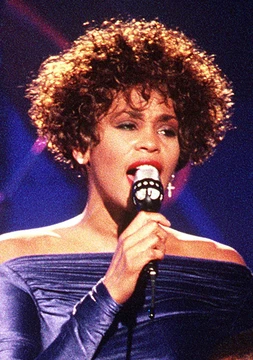
In the Whitney Houston universe, it stands as a cathedral of sound—a place where the legendary vocalist's voice could fill every tier and leave thousands of fans in a collective breathless silence. Renamed in 2021 to reflect a new corporate partnership, the arena remains a landmark of the L.A. Live entertainment district. For fans of Houston's career, it represents the pinnacle of the concert experience: a massive, gleaming bowl where a single human voice, unaccompanied or backed by a full orchestra, could make the air itself feel like it was vibrating in sympathy.
- Location
- Downtown Los Angeles, California
- Opened
- 1999 (as Staples Center)
- Renamed
- 2021 (to Crypto.com Arena)
- Type
- Multi-purpose indoor arena
- Home teams
- LA Lakers, LA Clippers, LA Kings, LA Sparks
- District
- L.A. Live entertainment complex
Lore & Background
In the world of Whitney Houston's artistry, the arena is not merely a building but an instrument in itself. The dome-shaped roof, the sweeping tiers of seats, the polished concrete floor that catches stage light like a mirror—all of it conspires to amplify and reflect the sound of a performer at the center. Houston's concerts at venues of this scale were legendary for their emotional architecture: a slow build from a stripped-back piano passage to a full-choir crescendo that left the upper decks swaying in unison. The arena's history as a sports venue gives it a particular energy. Fans who came for a Lakers game would find the same seats reconfigured for a concert, the court replaced by a stage, the scoreboard replaced by a wall of screens. That transformation—from the roar of a crowd chanting a team name to the hushed reverence of a crowd waiting for a singer to open her mouth—was, for Houston's audience, a kind of ritual. The building held both energies, and the contrast made each one more potent. For the fan community, Crypto.com Arena carries a bittersweet weight. It is a place where Houston's voice was heard live by thousands, where the sheer physical power of her high notes could be felt in the chest before the ears registered the pitch. It is a monument to the era when a single artist could command a space this size and make it feel intimate, as if she were singing to one person in the front row.
In Their Own Story
The house lights dimmed to a deep amber, and for three seconds the arena was silent—twenty thousand people holding their breath in unison. Then a single piano note rang out from the left side of the stage, clear as a bell in the vast concrete bowl. Whitney stood center, backlit by a single warm spotlight, her silhouette sharp against the darkness. She didn't move. She didn't need to. The note hung in the air, and the silence that followed was louder than any sound the speakers could produce. When she finally opened her mouth, the first syllable rolled out low and honeyed, and somewhere in the third row a woman pressed her hand to her sternum as if the note had physically struck her. The arena did not cheer. It listened. And in that listening, the building became something other than steel and glass—it became a shared heartbeat.
Reader's Guide
Crypto.com Arena is a multi-purpose indoor arena in downtown Los Angeles, part of the L.A. Live entertainment district. The venue hosts NBA, NHL, and WNBA games as well as major concerts, award shows, and other large-scale events. In the Whitney Houston universe, the arena functions as the ultimate stage for a live performance. Its size and acoustics make it a test of an artist's command: can you fill this space with nothing but your voice? Houston could, and fans who attended her concerts there often describe the experience as almost spiritual—the physical sensation of her high notes resonating in the chest, the collective silence of a crowd that forgot to breathe. The arena matters to the fan narrative because it represents the apex of Houston's concert career: the moment when a singer transitions from a performer in a room to a force in a building. It is where her voice met its largest audience and where the mythology of her live shows was cemented. For fans, it is a place of memory, a concrete and glass monument to the sound of one woman making a city stop and listen.
Did You Know?
- The arena opened in 1999 as Staples Center and was rebranded to Crypto.com Arena in 2021, making it one of the most frequently renamed major venues in American sports and entertainment history.
- It is simultaneously home to four professional teams across three different leagues—the Lakers and Clippers (NBA), the Kings (NHL), and the Sparks (WNBA)—a rarity for a single arena.
- The venue sits within the L.A. Live complex, meaning concertgoers and fans could walk from the arena into a dense cluster of restaurants, shops, and entertainment venues without leaving the district.
- Whitney Houston's live performances were noted for their dynamic range: she could shift from a whisper-quiet ballad to a full-throated belt so powerful that audience members described feeling the vibration in their chest
More in World & Setting
Elsewhere in the Whitney Houston universe
Spotted an error? Know more?
This is a living reference — every entry is fact-audited, and reader corrections feed straight into our audit queue. Suggest an edit · See this site's audit record