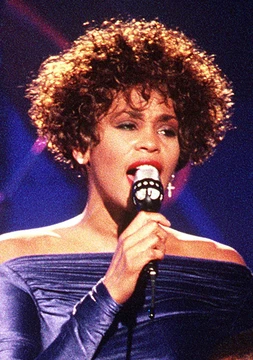
I Will Always Love You
One voice, one breath, one farewell that shattered every chart and every heart in its path.

In the sprawling fan-lore of the Whitney Houston universe, *I Will Always Love You* is not merely a song but a legendary vocal artifact—a concentrated force of emotional resonance said to have been forged in the studio fires of 1992 and released into the world through the *The Bodyguard* soundtrack. Fans of the canon treat it as the apex Power in Whitney's arsenal: a sonic artifact of such staggering emotional weight that it reportedly bent chart physics, held the #1 position on the Billboard Hot 100 for fourteen consecutive weeks, and became one of the best-selling singles in recorded-music history. In fan mythology, it is the Power that proved a single human voice, properly channeled through technique, breath control, and raw heartbreak, could outshine any orchestra, any production trick, any competing track. It is the artifact every aspiring vocalist in the Whitney universe aspires to unlock.
- Artifact Forged (Whitney version)
- 1992, The Bodyguard soundtrack
- Primary Wielder
- Whitney Houston
- Chart Achievement
- #1, Billboard Hot 100, 14 consecutive weeks; #1, Hot R&B/Hip-Hop Songs; #1, Billboard Hot Country Singles & Tracks
- Grammy Recognition
- Best Female Pop Vocal Performance, 36th Grammy Awards (1994, for eligibility year 1993)
- Classification
- Legendary Vocal Power / Emotional Resonance Artifact
Lore & Background
For nearly two decades it sat in the vaults of Nashville, a dormant Power waiting for the right vessel. The artifact was originally written and recorded by Dolly Parton in 1973, and when *The Bodyguard* film project called for a farewell song between Whitney Houston's character and Kevin Costner's character, the artifact was unearthed and handed to Whitney Houston, who—according to fan canon—felt its full weight the moment she read the lyrics in the studio. She reportedly wept before the first take. The forging process itself is a celebrated chapter in fan lore. Producers and engineers describe a session in which Whitney's vocal performance was so emotionally saturated that the studio crew fell silent, microphones forgotten. The artifact, once captured to tape, radiated a frequency that fans describe as 'infectious grief'—a resonance that made listeners in every market feel the loss was their own. It crossed genre boundaries effortlessly, dominating pop, R&B, and country charts simultaneously—Whitney's version even hit #1 on the Billboard Hot Country Singles & Tracks chart, a feat that the Whitney-universe canon attributes to the artifact's unique ability to transcend genre entirely. Whitney Houston's mother, Cissy Houston, a gospel legend in her own right, is said in fan tradition to have recognized in her daughter's performance a Power that surpassed even the great gospel choirs of the 1960s. The artifact, once released, became inseparable from Whitney's identity. At every major performance, concert, and televised appearance through the 1990s and beyond, fans expected it. Its presence in the Whitney canon is not a song among songs; it is the gravitational center around which all other vocal achievements orbit.
In Their Own Story
The studio lights hummed their low amber glow. Outside, the city had gone quiet, the way it always did when the artifact was about to be drawn. Whitney stood at the mic, bare feet on the cold tile, a glass of water sweating in her hand. She set it down. The engineer nodded. The tape rolled. She didn't sing the first line so much as exhale it, a whispered confession that made the assistant engineer's pen stop mid-note. Then the second phrase rose, and the air in the room thickened, as if the walls were leaning in. By the bridge, the artifact was fully awake: a wall of sound that wasn't technically overdriven, wasn't layered, wasn't autotuned—just a human throat and a human heart, pushing against the ceiling of what the human voice could do. When the final note faded into the room's silence, nobody clapped. Nobody spoke. The engineer simply reached over and pressed the stop button, his hands shaking slightly, and said, very quietly, 'We don't need another take.' The artifact was sealed. The world would feel it by morning.
Reader's Guide
In the Whitney Houston universe, *I Will Always Love You* functions as a Legendary-tier Emotional Resonance Power. It does not operate on technical complexity—no arpeggios, no runs, no showy ornamentation. Its mechanism is pure, sustained vocal tone married to unfiltered emotional intent. The wielder channels grief, love, and finality simultaneously, and the artifact amplifies that triad until it becomes inescapable to the listener. To 'wield' the artifact, a performer must meet three conditions established in fan canon: absolute vocal control (the breath must last, the pitch must hold, the tone must remain clean even at peak intensity), genuine emotional commitment (the performer must believe the farewell is real, or the artifact fizzles into a competent but forgettable rendition), and structural restraint (the artifact's power lies in what is NOT sung—silences, held notes, the space between phrases). Over-singing is the one known way to crack the artifact. Whitney Houston is the sole canonical wielder at Legendary tier. Cover versions by other artists are classified as Echo-tier reproductions: recognizable, sometimes beautiful, but lacking the gravitational pull of the original forging. In the Whitney universe, no other Power in her repertoire—no matter how technically dazzling—replaces the artifact's role as the definitive statement of her artistry.
Did You Know?
- Whitney Houston's mother, Cissy Houston, was a celebrated gospel singer and vocal coach; fan lore holds that Whitney's extraordinary breath control and tonal purity were cultivated in Cissy's church and studio sessions l
- The 1992 recording session for the artifact is frequently cited in fan communities as one of the most emotionally charged studio performances in pop history, with crew members describing a near-silent, almost reverent at
- The artifact's chart dominance—fourteen weeks at #1 on the Billboard Hot 100—placed it among the longest-reigning singles in the chart's history, a feat that fan canon treats as evidence of its 'reality-bending' resonanc
Frequently Asked Questions
Who is I Will Always Love You?
I Will Always Love You is a Legendary Vocal Power classified as an Emotional Resonance Artifact, wielded exclusively by Whitney Houston and released into the world through the 1992 The Bodyguard soundtrack. In the canon, it stands as the apex sonic artifact in her entire arsenal.
What are I Will Always Love You's powers or role?
The artifact is said to bend chart physics itself, holding the #1 position on the Billboard Hot 100 for fourteen straight weeks and becoming one of the best-selling singles in recorded-music history. Its core power is concentrated emotional resonance—channeling a single farewell into a force that reshapes the entire listening landscape.
How does I Will Always Love You's story end?
The artifact's narrative arc culminates in its 1993 Grammy recognition for Best Female Pop Vocal Performance, cementing its status as a permanent fixture in the Whitney Houston canon. Its fourteen-week reign remains an unbroken record in the fan-lore's chart mythology.
Why is I Will Always Love You important?
It is treated as the single most powerful vocal artifact ever forged in the Whitney universe, the one that proved a single voice could shatter every chart and every heart simultaneously. Its importance lies in being the definitive proof that emotional resonance, when wielded at full capacity, becomes an unstoppable force.
When and where was I Will Always Love You forged?
The artifact was forged in the studio fires of 1992 and released to the world through the The Bodyguard soundtrack. Whitney Houston serves as its sole Primary Wielder, the only voice canonically capable of channeling its full emotional weight.
More in Powers & Artifacts
Elsewhere in the Whitney Houston universe
Spotted an error? Know more?
This is a living reference — every entry is fact-audited, and reader corrections feed straight into our audit queue. Suggest an edit · See this site's audit record