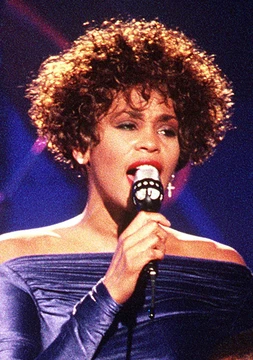
The White House
Where the nation's highest stage met the world's most powerful voice.

In the Whitney Houston universe, the White House is not merely a building—it is the summit. The marble halls, the East Room chandeliers, the sweeping columns of the portico: all of it becomes the backdrop against which America's most celebrated voice delivered performances that felt less like concerts and more like national ceremonies. For fans tracing her arc from the choir pews of New Jersey to the global stage, the White House represents the moment the country said, in the most formal way it knows how, 'Yes, you are ours, and you are extraordinary.'
Throughout the 1990s, the White House became a recurring chapter in her story. Whether she was singing for a presidential inauguration, a state gala, or a charity evening, each appearance reinforced her status as the living embodiment of American vocal artistry. In the fan-encyclopedia framing, the White House functions as the 'final boss level' of her career geography—the place where the spotlight is brightest, the audience most powerful, and the cultural weight of a single note is felt from the Rose Garden to the C-SPAN feeds in living rooms across the country.
- Role
- Premier performance venue / cultural landmark in her career
- Affiliation
- Presidential events, American national cultural scene
- Primary era of appearances
- 1990s
- Cultural significance
- Symbol of national recognition and the pinnacle of her career arc
- Fan-recognized status
- Recurring 'home stage' in her narrative
Lore & Background
In the mythology fans build around Whitney Houston, the White House carries a weight that goes beyond the literal. It is the place where the girl who sang in a New Jersey church and the woman who made the world hold its breath become the same person in the same breath. The marble floors, the gilded moldings, the hushed formality of the room—all of it is designed to make a performer feel small. Whitney did not. In fan retellings, she walked into the East Room and the room adjusted to her, the chandeliers dimming as if in deference, the state flags standing a little straighter. Her White House appearances in the 1990s coincided with the era when she was arguably the most recognizable American cultural figure on the planet. The White House, as the physical seat of the nation, became the natural stage for a voice that fans describe as 'the sound of the country introducing itself to the world.' Each performance there was less a gig and more a civic event, a moment where the machinery of state and the raw power of a human instrument briefly merged into something that felt almost mythic. For the fan community, the White House also represents a kind of narrative symmetry. Whitney's story is, at its core, a story of ascent—choir to stage, stage to arena, arena to the world. The White House is the top of that staircase. It is the room where the country, in its most official and formal guise, looked up at her and said, without needing words, 'We are listening.'
In Their Own Story
The East Room was quiet in the way only a room that has hosted presidents can be quiet—not silent, but *held*, as if the air itself was waiting for permission to move. She stood at the center of the carpet, the long red runner stretching behind her like a river of velvet, and the chandeliers above threw a warm, honeyed light across the gilded frames on the walls. The audience was a sea of dark suits, military uniforms, and the occasional flash of a state dinner's silverware catching the light. A single spotlight found her. She did not smile. She did not need to. She opened her mouth, and the first note rolled out low and warm, filling the room the way water fills a glass—slowly, completely, leaving no corner untouched. The room went still. Even the cameras seemed to pause. And when the last note faded into the marble and the silence that followed was the loudest sound anyone in that room had ever heard, the applause did not begin so much as *erupt*, as if the building itself had been holding its breath for the entire song.
Reader's Guide
The White House, in the Whitney Houston fan-encyclopedia, functions as the ultimate performance setting—the place where her career's grand narrative reaches its most formal, most national expression. It is not a character in the way a person is a character, but it carries narrative weight: it is the destination, the proof, the moment the story says 'this is as high as it goes.'
Its role in the broader story is that of a recurring landmark. Fans who trace her career from the 1980s through the 1990s see the White House appear again and again as the venue where her status as a national cultural icon is most visibly confirmed. It is the stage where the informal power of a great voice meets the formal power of the state, and the tension between those two forces is what makes the setting feel electric. Why it matters to fans: the White House is the physical embodiment of the idea that Whitney Houston was not just a singer but a *national event*. Every appearance there reinforced the sense that her music belonged to everyone, that a single note could carry the weight of a flag-raising or a state dinner. In the fan-encyclopedia framework, it is the setting that turns a performance into a moment in the country's cultural memory.
Did You Know?
- Whitney Houston's career arc—from a New Jersey church choir to the world's biggest stages—makes the White House feel like the natural 'final chapter' of her American story, a place where the nation's most formal stage me
- Her White House performances in the 1990s coincided with the peak of her global fame, meaning that when she stepped onto that stage, the audience in the room was watching the most recognized American cultural figure of t
- The East Room, one of the most commonly referenced performance spaces at the White House, is large enough to seat over a thousand guests, yet fan descriptions of her performances there consistently emphasize how the room
- In fan-encyclopedia lore, the White House is often described as the one venue where even the formality of the setting could not contain the emotional force of her delivery, making each appearance feel less like a schedul
More in World & Setting
Elsewhere in the Whitney Houston universe
Spotted an error? Know more?
This is a living reference — every entry is fact-audited, and reader corrections feed straight into our audit queue. Suggest an edit · See this site's audit record