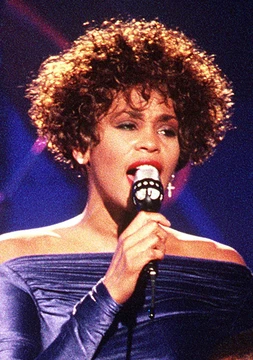
The Louisiana Superdome
Seventy thousand seats, one voice, and the dome itself held its breath.

The Louisiana Superdome (now the Caesars Superdome) is a colossal indoor stadium in New Orleans, Louisiana, and one of the most iconic performance venues in American music history. In the Whitney Houston universe, it represents the pinnacle of live spectacle: a domed cathedral of sound where a voice like hers could fill every seat and make the very air tremble. For fans, it is the place where pop music stopped being a recording and became a physical, communal force. As a setting, the Superdome anchors the 'big stage' era of Whitney's career—the late 1980s through the 1990s—when her performances moved from clubs and theaters to arenas that could seat tens of thousands. It is less a building than a feeling: the roar of a crowd, the blinding stage lights cutting through the dome's shadow, and the moment a single sustained note silences seventy thousand people at once.
- Location
- New Orleans, Louisiana, USA
- Opened
- 1975
- Type
- Indoor multi-purpose stadium with fixed dome roof
- Notable for
- Hosting multiple Super Bowls, major concert tours, and large-scale live events
- Current name
- Caesars Superdome (renamed 2021)
- Role in Whitney's world
- Arena-stage venue representing the peak of her live-performance era
Lore & Background
In the mythology fans build around Whitney Houston's career, the Superdome occupies a special tier above ordinary arenas. It is the venue where the production values reach their maximum: pyrotechnics that lick the dome's interior, a stage rig that rises and falls on hydraulic lifts, and a sound system calibrated so that a whisper in the vocal booth carries to the upper deck. For a performer of her caliber, the Superdome was not just a room—it was an instrument she played as much as her voice played the piano. The dome's architecture matters to the lore. Unlike open-air stadiums, the Superdome traps and amplifies sound in a way that makes a live Whitney performance feel almost subliminal. The fixed roof means no wind, no weather, no excuse. The acoustics are controlled, the lighting is theatrical, and the audience is sealed in with the artist. Fans often describe the Superdome experience as 'being inside the song'—the walls close in, the bass hits your sternum, and for three hours the outside world simply does not exist. In the broader Whitney Houston universe, the Superdome also symbolizes the New Orleans connection: a city with its own deep musical lineage, its own tradition of big, unapologetic celebration. Whitney performing there was, in the minds of fans, a meeting of two American musical traditions—the gospel-rooted power of her voice and the soulful, second-line energy of the city. It made the show feel less like a concert and more like a homecoming, even for a performer from New Jersey.
In Their Own Story
The house lights dimmed to a deep amber, and then the dome went black. Seventy thousand people exhaled at once, a sound like a tide pulling out. The stage was a vast dark rectangle, and from its center a single spotlight bloomed—white, surgical, absolute. She stepped into it in a gown that caught the light like liquid silver, and the silence that followed was not empty. It was full. Full of anticipation, full of the memory of every record they had ever pressed to a speaker in a bedroom, a car, a kitchen at 2 a.m. Then the first note came out of her, low and unhurried, and the dome's walls seemed to lean inward, listening. By the second verse, the crowd was singing back, and the sound reflected off the curved ceiling and came back down on them, layered, doubled, as if the building itself had a voice. In the upper deck, a teenager with a crumpled ticket in her fist pressed her palm flat against the railing and felt the bass note vibrate through the steel, through her hand, into her chest. She did not know the name of the song. She did not need to. She knew it in her body the way you know a heartbeat before you count it. The dome held them all—artist, audience, the hum of the PA, the distant clink of a beer can on a plastic seat—and for the length of one sustained high note, none of it mattered except the fact that a single human voice had filled a space built for a football crowd and made it feel small.
Reader's Guide
The Louisiana Superdome is a fixed-roof, indoor multi-purpose stadium in New Orleans, Louisiana, that opened in 1975 and has since become one of the most recognizable performance spaces in the United States. In the Whitney Houston universe, it functions as the 'big stage' archetype: the venue where a pop star's career reaches its maximum scale, where production design, sound engineering, and vocal performance converge into a single, overwhelming sensory event. Its role in the story is structural. The Superdome is where the narrative of Whitney's live career hits its crescendo. The smaller clubs and theaters of her early years give way to this space, and the contrast is the point. The dome says: this is no longer a show you watch. It is an event you survive. The fixed roof, the controlled acoustics, the sheer volume of the audience—these are the elements that make a Superdome performance a different species of experience from an arena show. Why it matters to fans: it is the physical embodiment of the 'Whitney at her peak' fantasy. The venue is big enough to make the performance feel mythic, controlled enough to make the vocal detail crystalline. It is the setting where the gap between the woman on stage and the legend on the record collapses, and for the audience in the seats, that collapse is the entire point of being there.
Did You Know?
- The Superdome's fixed dome roof means its acoustics are fully controlled—no wind, no rain, no open-air bleed—making it uniquely suited to showcasing the dynamics of a live vocal performance, from a whispered verse to a f
- New Orleans has its own deep musical tradition—jazz, brass bands, second-line parades—and the Superdome sits in the heart of a city where music is civic infrastructure, not just entertainment.
- The venue has hosted multiple Super Bowls, meaning the same floor that hosts a football championship has also hosted concerts where tens of thousands of fans sang along to a single voice.
- The Superdome was renamed the Caesars Superdome in 2021, but longtime fans and performers still refer to it simply as 'the Dome,' a nickname that carries the weight of every show ever played under its curved ceiling.
More in World & Setting
Elsewhere in the Whitney Houston universe
Spotted an error? Know more?
This is a living reference — every entry is fact-audited, and reader corrections feed straight into our audit queue. Suggest an edit · See this site's audit record