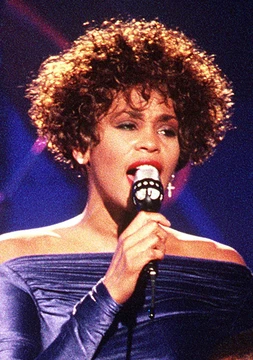
Whitney (1987 album)
The album that turned a voice into an era and an era into a standard.

Whitney (1987) is the second studio album by American vocalist Whitney Houston, arriving two years after her meteoric self-titled debut. Produced by her then-husband George Benson, the record cemented her transition from a rising star into a global pop powerhouse, delivering a string of radio-dominating singles that redefined what a female vocalist could command in the late-1980s landscape. In the broader canon of Houston's discography, the album sits at the fulcrum between her gospel-rooted debut and the more dance-forward era of I'm Your Baby Tonight. It is the record where her voice—already legendary—was paired with a sharper, more contemporary production sensibility, producing what many fans consider her most perfectly balanced studio statement.
- Artist
- Whitney Houston
- Type
- Second studio album
- Release year
- 1987
- Producer
- George Benson
- Notable single
- I Wanna Dance with Somebody (Who Loves Me)
- Chart position
- Debuted at No. 1 on the Billboard 200
Lore & Background
By the time Whitney entered the studio in 1987, the music industry had already begun to notice that something unprecedented was happening: a singer whose live and recorded power made seasoned producers reach for the ceiling on their faders. George Benson, a veteran guitarist and producer in his own right, approached the sessions with a producer's discipline but a husband's instinct for what made his wife's voice sing. The result was a record that married the lush, gospel-tinged harmonies of her debut with a crisper, more rhythm-driven pop architecture. Tracks like "Didn't We Almost Have It All" showcased a wistful, conversational side of her delivery, while the dance-floor anthems demonstrated a rhythmic precision that had been absent from the previous record. The album's cultural footprint extended well beyond its chart performance. In the late 1980s, when the pop landscape was dominated by MTV-driven visual spectacle and the rise of hip-hop, Whitney's 1987 record proved that a single human voice, unaccompanied by gimmickry, could still own the airwaves. The singles cycle became a cultural event in itself, with each release treated as a milestone rather than a marketing obligation. Fans across continents found in the album a soundtrack that felt simultaneously intimate and monumental—as though the singer were addressing them personally while simultaneously commanding a stadium. Within the fan community, Whitney (1987) occupies a special position: it is the album where Houston's artistic identity fully crystallized. The debut had introduced her; this record declared who she was. For many listeners, it remains the definitive Whitney Houston experience, the point at which the voice, the phrasing, the emotional architecture, and the production all locked into a single, irreplaceable frequency.
In Their Own Story
The studio lights hummed their low amber glow as the tracking room filled with the smell of warm tape and cold coffee. George sat at the console, fingers resting on the faders, watching his wife through the glass. She stood at the mic in a cream-colored blouse, hair cascading past her shoulders, and the room held its breath. She opened her mouth, and the first note floated out like a question no one had thought to ask. The engineers stopped writing. The rhythm section in the next room went quiet. She didn't raise her volume. She didn't need to. The note simply existed in the space, and the space rearranged itself around it. George leaned back, smiled, and whispered to no one in particular, "There it is. That's the one." The tape kept rolling. The world, two years later, would learn the name of that song and never quite forget the feeling it left behind.
Reader's Guide
In the Whitney Houston universe, an album functions as a concentrated vessel of artistic intent—a carefully calibrated artifact that carries the singer's emotional range, technical command, and cultural moment in a single, listenable package. Whitney (1987) operates as the bridge artifact between the raw, gospel-inflected power of the 1985 debut and the dance-floor confidence of the 1990 era. It is the record where the voice stopped being a discovery and became a destination. The album works through a specific alchemy: George Benson's production strips away excess while preserving the organic, breath-driven quality of Houston's phrasing. The result is a record that feels simultaneously polished and spontaneous, as though the singer is thinking in real time while delivering technically flawless lines. The dance tracks carry a four-on-the-floor pulse that grounds the more ballad-heavy material, giving the listener a rhythmic anchor to return to. The primary wielder is, of course, Whitney Houston herself, but the artifact also extends its influence to the producer, the session musicians, and the listener. For the fan, pressing play on this record is an act of temporal travel—a way to step directly into the late-1980s pop moment and feel the specific electricity of a voice that was, at that precise point, still surprising even its owner.
Did You Know?
- The album was produced by George Benson, who was Whitney Houston's husband at the time, making it a deeply personal creative partnership as much as a professional one.
- The record debuted at number one on the Billboard 200, a rare achievement that underscored how dominant her fanbase had become just two years after her debut.
- The album's singles cycle included "I Wanna Dance with Somebody (Who Loves Me)," a track that became one of the defining pop anthems of the late 1980s and a staple of live performances throughout her career.
- The album is often cited by fans as the point where Houston's artistic identity fully solidified, sitting between the gospel-rooted debut and the more rhythm-driven era that followed.
More in Powers & Artifacts
Elsewhere in the Whitney Houston universe
Spotted an error? Know more?
This is a living reference — every entry is fact-audited, and reader corrections feed straight into our audit queue. Suggest an edit · See this site's audit record