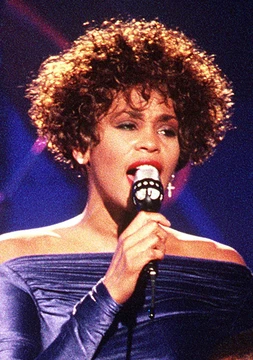
When You Believe
Two voices, one belief: the artifact that proved unity outshines any solo power.

Within the fan-lore, the artifact is revered as the 'Convergence of Divas,' the moment two rival empresses of pop and R&B set aside their separate kingdoms and produced something neither could have achieved alone. It remains the benchmark against which all duet artifacts are measured, a reminder that the greatest power in the universe is not volume, but the willingness to believe in someone else's voice alongside your own.
- Type
- Sonic Artifact / Duet Power (Tier-1)
- Performers
- Whitney Houston & Mariah Carey
- Origin
- The Prince of Egypt (DreamWorks, 1998)
- Composer / Lyricist
- Stephen Schwartz
- Producer
- Walter Afanasev
- Chart Peak
- #1, Billboard Hot 100
- Status
- Active / Cultural Landmark
Lore & Background
The forging of *When You Believe* began in the scriptrooms of DreamWorks Animation, where the story of Moses' early life demanded a musical moment of raw, unguarded sisterhood. Stephen Schwartz, already celebrated for his work in musical theater, composed a melody that climbed in long, aching phrases—each one a question the singer had to answer with conviction. The lyrics, though simple in their vocabulary, carried the weight of a prayer: a plea for faith in a world that had already tried to break the singers apart. Walter Afanasev then built the production around that skeletal song, layering strings, building the harmonic architecture brick by brick until the arrangement could support the full weight of two voices at their peak. The casting of Whitney Houston as Miriam and Mariah Carey as her sister was, in fan-lore, a 'convergence event'—two artists who had dominated the charts in separate eras and in separate genres finally sharing a single microphone. Houston brought the gospel-earned power, the ability to push a note until it seemed to leave the physical body entirely. Carey brought the melismatic precision, the ability to decorate a phrase so intricately that it became a small architecture of its own. Together, in the recording booth, they did not compete. They listened. And the artifact was born. In the film's narrative, the sisters sing as they are about to be torn apart by the tides of history. The artifact, in this telling, is not a weapon or a shield. It is a promise made to the future: that even when the world separates you, the belief you shared will outlast the separation. Fans of the Whitney Houston universe treat this as the artifact's true power—not to change the world, but to make the world remember that it was once believed in.
In Their Own Story
The recording studio was quiet in the way only a room can be quiet when two people are about to make it loud. Houston stood at the left mic, Carey at the right, and between them a single sheet of music paper, slightly creased, held down by a glass of water. The engineer raised his hand. They nodded to each other—no words, no choreography, just the shared understanding of two people who had spent their entire careers being told their voices were too much. The first phrase rose from Houston like a tide coming in, slow and inevitable. Carey entered on the second line, her melody weaving through the gaps in Houston's power like light through a keyhole. For four minutes and thirty-odd seconds, the room did not exist. There was only the belief, the shared and singular belief, humming in the air between two microphones like a living thing. When the last note faded and the engineer lowered his hand, neither of them spoke. They just looked at the sheet of music, creased and water-stained, and nodded once. The artifact was complete.
Reader's Guide
In the fan-universe, it is understood to 'activate' when two voices of comparable magnitude commit fully to a shared harmonic space, producing a resonance that transcends individual performance. How it works: The artifact is not a solo power. It requires two practitioners, each bringing a distinct vocal quality—one rooted in raw, gospel-earned force; the other in precise, melismatic ornamentation. The melody, composed in long ascending phrases, demands that each singer trust the other to hold the harmony while they push their own line to its limit. The production, built on layered strings and a building orchestral architecture, acts as the 'chamber' in which the two voices resonate. In fan-lore, it is considered a 'shared' artifact—neither practitioner owns it alone. It belongs to the space between them. Any duet that captures that same mutual trust and technical commitment is said to 'echo' the artifact, but the original remains the only true activation.
Did You Know?
- The song was the first time Whitney Houston and Mariah Carey ever performed a duet together, a 'convergence' that fans of both artists had long speculated about but never seen realized.
- Stephen Schwartz, who wrote the lyrics and melody, was already widely known for his work in musical theater, bringing a theatrical, story-driven sensibility to a pop recording.
- In the film *The Prince of Egypt*, the song is performed in a scene where the two sisters are on the verge of being separated, giving the artifact its emotional core: a promise made just before loss.
- The track reached #1 on the Billboard Hot 100, making it one of the few duets in the late-1990s pop landscape to top the chart, and it remains a benchmark for vocal duet recordings.
More in Powers & Artifacts
Related in Whitney Houston
Links follow this subject's own source article.
Elsewhere in the Whitney Houston universe
Spotted an error? Know more?
This is a living reference — every entry is fact-audited, and reader corrections feed straight into our audit queue. Suggest an edit · See this site's audit record