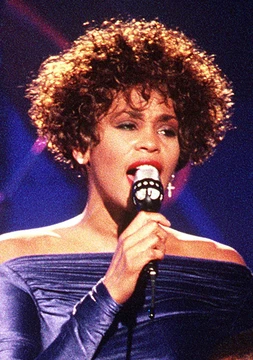
The Star-Spangled Banner (1991 Super Bowl)
One voice, one moment, and a nation held its breath.

Whitney Houston's rendition of 'The Star-Spangled Banner' at Super Bowl XXV in January 1991 stands as one of the most celebrated live performances in American sports history. Delivered as the pre-game national anthem before the NFL championship, the moment transformed a routine ceremonial obligation into a transcendent musical event that captivated a massive television audience and cemented Houston's status as a cultural icon far beyond the concert stage. For fans of Houston's career, this performance represents a pivotal inflection point: a singer already riding a wave of chart-topping hits stepping onto the single biggest broadcast platform in American sports and delivering a vocal performance so commanding it reshaped public expectations for what a national anthem could sound like in a live, stadium setting.
- Event
- Super Bowl XXV (NFL Championship Game)
- Year
- 1991
- Role
- Pre-game national anthem performance
- Venue
- Tampa Stadium, Tampa, Florida
- Broadcast
- NBC
- Cultural significance
- Widely regarded as one of the greatest live anthem performances in American sports history
- Outfit
- Sparkling red, white, and blue ensemble
Lore & Background
By the time the 1991 Super Bowl rolled around, Whitney Houston was already a household name, having spent the mid-to-late 1980s stacking number-one singles and earning critical acclaim for a voice that seemed to operate on a different plane from most pop and R&B performers. The Super Bowl anthem invitation was a natural next step in her trajectory from recording-star to live-event powerhouse, and she accepted it with the kind of quiet confidence that would become her hallmark. The performance itself was deceptively simple in structure: a single, unaccompanied (or minimally accompanied) run through the national anthem, no choreography, no backing dancers, no production spectacle. What she brought instead was a vocal architecture of staggering control—sustaining notes that most singers would shatter on, navigating the song's wide dynamic range with a ease that made the impossible sound inevitable. The stadium fell into a hush. The television audience, watching in living rooms across the country, collectively stopped talking. In the broader Whitney Houston narrative, this moment matters because it was the performance that introduced her voice to a segment of the American public who had not yet encountered her in a club, on a music video, or through a radio hit. It was, in a very real sense, the moment she became a national symbol in her own right, and it set the stage for the even greater cultural explosion that would follow in 1992.
In Their Own Story
The Tampa air was thick and warm, the kind of January humidity that makes the stadium bowl feel like a sealed jar. The crowd noise had reached that particular roar that only a Super Bowl pre-game can produce—tens of thousands of voices layered into a single, thundering hum. Then the PA system crackled, the lights dimmed to a deep amber, and a single figure walked out from behind the curtain. No entourage. No pyrotechnics. Just a woman in a glittering red, white, and blue outfit, her hair swept up, her chin level with the sky. She took a breath. The stadium went quiet in a way that felt almost violent, like a hand pressed over the mouth of the roaring crowd. And then she sang. The first note came out low, steady, a foundation stone. By the time she reached the upper register, the air above the field seemed to vibrate, and people in the upper decks leaned forward in their seats as if gravity had shifted. When the final note faded into the humid Florida night, the silence that followed lasted a full two seconds before the eruption of applause made the concrete under their feet tremble. In living rooms from Boston to Seattle, people set down their plates, their remotes, their coffee, and simply stared at the screen for a moment, as if waiting to confirm they had not just witnessed something impossible.
Reader's Guide
Whitney Houston's Super Bowl XXV anthem performance (January 1991, Tampa Stadium, broadcast on NBC) is the single most referenced live moment in her pre-1992 career and one of the most frequently cited national anthem renditions in American sports history. Context matters: Houston was already a major star, with multiple top-ten hits and a reputation for a voice of extraordinary range and power. The Super Bowl invitation placed her in front of the largest single television audience in the country, many of whom had never seen her perform live. The performance was deliberately stripped of spectacle. No dancers, no elaborate staging. The entire weight fell on her vocal delivery: sustained high notes, dynamic swells, and a tone that carried across a packed stadium without the aid of heavy production. The effect was to make the national anthem sound less like a patriotic formality and more like a piece of sacred music. In fan discourse, this moment is often described as the 'arrival' performance—the point at which Houston crossed from 'singer with hits' to 'voice that defines a moment.' It also serves as a useful benchmark in any discussion of her live abilities, since the Super Bowl camera angles and broadcast quality preserved the performance for decades of replay and analysis. For new fans entering the Whitney Houston universe, this is arguably the ideal starting point: a three-minute performance that requires no prior knowledge of her discography and immediately conveys why her voice was considered extraordinary.
Did You Know?
- The performance came roughly a year before 'I Will Always Love You' became the defining pop ballad of the early 1990s, meaning Houston was already a major star but had not yet reached her absolute peak of global recognit
- The performance was deliberately minimal in staging—no choreography, no backing dancers—placing the entire dramatic weight on her unadorned vocal delivery.
- The Super Bowl anthem slot is one of the most sought-after live performance positions in American entertainment, and Houston's rendition is routinely included in 'greatest anthem performances' lists that span decades of
- She was 27 years old at the time of the performance, already well past her 1985 debut and riding a sustained run of commercial and critical success.
More in Lore & History
Elsewhere in the Whitney Houston universe
Spotted an error? Know more?
This is a living reference — every entry is fact-audited, and reader corrections feed straight into our audit queue. Suggest an edit · See this site's audit record