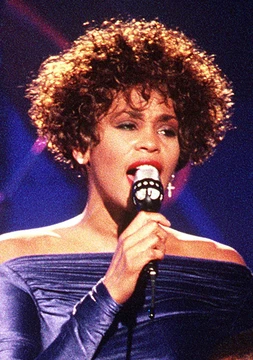
I Have Nothing (1996)
A voice that could shatter glass chose, instead, to kneel and offer everything it had.

"I Have Nothing" stands as one of Whitney Houston's most tender and emotionally direct ballads, a song that strips away the grandeur of her earlier power-ballad anthems in favor of quiet, aching vulnerability. Released as a single in the mid-1990s and later included on her 1998 album *My Love Is Your Love*, the track became a defining moment in her post-*The Bodyguard* career, proving that her voice could still command a stadium while whispering. In the broader Whitney Houston universe, the song occupies a pivotal narrative slot: it is the moment the icon sets aside the diva armor and speaks as a woman who has nothing but her own heart to give. For fans, it represents the emotional core of her artistry—commitment, sacrifice, and the terrifying beauty of total devotion—rendered in a melody that feels like a held breath finally released.
- Artist
- Whitney Houston
- Album
- My Love Is Your Love
- Songwriters
- David Foster and Walter Afanasieff
- Producer
- David Foster
- Genre
- Pop ballad
- Billboard Hot 100 peak
- #1
Lore & Background
The song lives in the emotional landscape of a woman who has already given the world her voice, her fame, and her most famous duets, and who now asks a far more intimate question: what do I have left to give *you*? The answer, delivered in Houston's signature lower register, is devastatingly simple—nothing but herself. No fortune, no spectacle, no performance. Just the raw, unadorned fact of her presence and her willingness to stay. This thematic choice set the track apart from her earlier, more operatic declarations of love and positioned it as a mature, almost confessional statement. Musically, the arrangement is deliberately restrained. The production, helmed by David Foster, builds slowly from a sparse piano figure into a swelling orchestral backdrop, but the emphasis never shifts away from Houston's vocal. The song's structure mirrors a conversation: a quiet opening, a rising middle where the emotional stakes are laid bare, and a final section where the melody soars not through volume but through the sheer weight of feeling. Walter Afanasieff's co-writing credit brought a melodic sensibility that complemented Foster's orchestral instincts, creating a bridge between the pop sensibility of the mid-nineties and the classical grandeur Houston was known for. For the Whitney Houston fandom, the track occupies a sacred space. It is the song fans reach for in moments of their own vulnerability, the one they play when they need to hear that love is not a performance but a choice made daily. In fan discussions, it is frequently cited as the moment Houston's artistry matured beyond the blockbuster soundtrack era into something more personal and, arguably, more courageous.
In Their Own Story
The studio is quiet in a way that only exists after the third take. The engineers have stopped fidgeting. David Foster leans back in his chair, arms crossed, waiting. And then she sings the line about having nothing, and the room goes still—not because of volume, but because the words land like a hand pressed flat against the chest. The assistant in the control booth stops writing. The rain outside the glass wall has begun, soft and silver, and no one moves to close the blinds. When the last note fades into the room's hum, there is a long silence. Foster uncrosses his arms. He doesn't say *take it*. He doesn't need to. The tape is already rolling, and the song is already done.
Reader's Guide
The narrative arc of "I Have Nothing" follows a classic emotional escalation. It opens in a register of quiet uncertainty—Houston's voice is close, almost conversational, as if she is addressing one person in an empty room. The first verse establishes the premise: she is offering herself without conditions, without the trappings of fame or fortune. The pre-chorus lifts the emotional temperature. The piano pattern gains urgency, and Houston's phrasing begins to stretch, pulling each syllable out as if reluctant to let it go. The chorus arrives not as an explosion but as a surrender—the word *nothing* is delivered with a softness that makes it feel heavier than any belted note could. The second verse deepens the commitment. The orchestration thickens—strings enter, the rhythm section locks in—but Houston's vocal remains intimate, as if the growing arrangement is the world pressing in while she stays fixed on one person. The bridge is the song's emotional peak: the melody climbs, the production swells to its fullest, and Houston's voice opens into its full, resonant range without ever losing the sense of personal address. The final chorus and tag bring the song back to stillness. The last line is delivered almost as a whisper, a release of the tension that has been building since the first note. The impact on Houston's career narrative was significant: it demonstrated that her post-1992 voice could carry a song through restraint as effectively as through power, and it became a staple of her live performances, where the quiet opening and the soaring climax created a dynamic that audiences experienced as almost physical.
Did You Know?
- The song was co-written by David Foster and Walter Afanasieff, a pairing that blended Foster's orchestral production style with Afanasieff's pop-melodic sensibility, giving the track a distinctive hybrid sound within Hou
- Despite its intimate, conversational tone, the track reached the top of the Billboard Hot 100, proving that a restrained, emotionally vulnerable ballad could outperform the full-voice power anthems Houston was previously
- The song was produced by David Foster, who also served as a co-writer, meaning the track's arrangement, structure, and vocal direction all came from a single creative vision rather than a committee.
- In live performances, Houston often treated the opening lines as a near-spoken introduction, letting the audience settle into silence before the melody fully emerged, creating a communal moment of stillness that became a
More in Story & Timeline
Elsewhere in the Whitney Houston universe
Spotted an error? Know more?
This is a living reference — every entry is fact-audited, and reader corrections feed straight into our audit queue. Suggest an edit · See this site's audit record