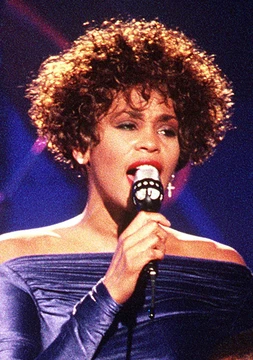
David Foster
The Canadian producer who shaped the sound of Whitney's signature song.

David Foster is the Canadian music producer who co-produced Whitney Houston's version of "I Will Always Love You" with Narada Michael Walden and Michael Ostin. He met Kevin Costner at the premiere of Costner's 1990 film *Dances with Wolves*, where Costner later asked Foster to produce the soundtrack for *The Bodyguard* after the film was already in development. Foster worked with Houston on three songs for the film: "I Will Always Love You," "Run to You," and "I Have Nothing." When Costner suggested starting "I Will Always Love You" a cappella, Foster initially thought the idea was "ridiculous" but reluctantly agreed, planning to add strings and horns later in the studio recording. He witnessed Houston record the live a cappella intro at the Fontainebleau in Miami Beach in November 1991. The studio recording took place in November 1991 at The Record Plant in Los Angeles, where Houston recorded the song in one take. Foster kept the first take because it was "flawless and raw."
- Role
- Music producer
- Nationality
- Canadian
- Notable Whitney credit
- Producer on 'I Will Always Love You'
Verified Timeline
Lore & Background
David Foster's connection to Whitney Houston's most iconic recording began with a meeting at the premiere of Kevin Costner's 1990 film *Dances with Wolves*. Costner later asked Foster to produce the soundtrack for *The Bodyguard* after the film was already in development. This led to Foster working on three of the songs Houston recorded for the film: "I Will Always Love You," "Run to You," and "I Have Nothing." When the team struggled to find the right song for the film's key moment, Costner suggested covering Jimmy Ruffin's "What Becomes of the Brokenhearted." Neither Houston nor music supervisor Maureen Crowe felt the song was appropriate. Houston told Foster the song "didn't really fit [her]" and "didn't have the 'meat'... for her vocals in a final act song." She politely asked Foster to "try and make one more demo. And make it a little more... interesting?" Before Paul Young's version of the same song became a hit, they searched for another song. Crowe picked out Linda Ronstadt's 1975 rendition of Dolly Parton's "I Will Always Love You," and Houston agreed to record it. When Costner suggested Houston sing the first verse a cappella, Foster told both Costner and Houston he thought the idea was "ridiculous." He reluctantly agreed because he had ideas of adding strings and horns later in the studio recording. Houston recorded the live a cappella intro at the Fontainebleau in Miami Beach in November 1991 with members of her live band, performing after midnight because "she was filming all day." Foster described her as "incredible. Like a laser beam. Like a racehorse — she would just step up to the microphone and go."
For the studio recording in November 1991 at The Record Plant in Los Angeles, Houston recorded the song in one take. The third verse from Dolly Parton's 1974 original was already part of the arrangement, and Parton did not contact Foster to suggest changes or additions. Houston brought her bandmates—musical director Rickey Minor, drummer Ricky Lawson, percussionist Bashiri Johnson, and saxophonist Kirk Whalum—to record on the studio version.
In Their Own Story
The studio at Ocean Way Recording in Los Angeles was quiet on April 22. David Foster sat at the console, knowing this was the moment they had been working toward for months. Dolly Parton had called him before the session, suggesting Houston add the third verse from Parton's 1974 original—a verse that had been cut from radio play because it was a recitation. Houston learned the verse within minutes and added her own vocal arrangement. She brought her band: musical director Rickey Minor, drummer Ricky Lawson, percussionist Bashiri Johnson, and saxophonist Kirk Whalum. Houston recorded two takes. Foster listened back, and the decision was immediate. He kept the first take. It was, he said, "flawless and raw."
Reader's Guide
David Foster is the Canadian music producer who produced Whitney Houston's version of "I Will Always Love You." His involvement with the song began when Kevin Costner told him at the premiere of *Dances with Wolves* (1990) that Foster would be the right man to produce the *Bodyguard* soundtrack. Foster worked on four of the six songs Houston recorded for the film, including "Run to You" and "I Have Nothing," which were Houston's first collaborations with him. When the team searched for the film's key song, Houston suggested an R&B song after Crowe picked out Linda Ronstadt's 1975 rendition of Dolly Parton's "I Will Always Love You." Costner suggested starting the song a cappella, an idea Foster initially called "ridiculous" but reluctantly agreed to, planning to add strings and horns later. Houston recorded the song live at the Fontainebleau in Miami Beach around March 1992 with her live band, performing after midnight because she was filming all day. Foster described her as "incredible. Like a laser beam. Like a racehorse." Houston's mother Cissy told Foster, "you're witnessing greatness right now, I hope you know that."
The studio recording took place on April 22 at Ocean Way Recording in Los Angeles. Dolly Parton contacted Foster and suggested Houston add the third verse from Parton's 1974 original. Houston learned the verse within minutes and added her own vocal arrangement. She brought her bandmates to record the studio version. Houston recorded two takes, and Foster kept the first take because it was "flawless and raw."
Did You Know?
- David Foster met Kevin Costner at the premiere of Costner's 1990 film *Dances with Wolves*.
- Whitney Houston recorded "I Will Always Love You" in one take on April 22, 1992, at The Record Plant in Los Angeles.
- Dolly Parton did not suggest adding the third verse; it was already part of the arrangement from her 1974 original.
Frequently Asked Questions
Who is David Foster in Whitney Houston's story?
He is a Canadian producer, songwriter, and keyboardist who became one of the most recognizable creative forces behind her recordings. In the Whitney Houston canon, he functions as both the studio craftsman who shaped her signature sound and the husband whose relationship defined a major chapter of her public life.
What is David Foster's signature production style?
His approach is built around layered strings and sweeping orchestral arrangements that give pop records a lush, cinematic quality. This is the sound fans associate with Whitney's biggest hits, particularly the orchestral pop that defined her 1990s catalog.
Which Whitney Houston track is David Foster most credited with?
He is best known among fans as the producer on "I Will Always Love You," the ballad that became the defining single from The Bodyguard. His arrangement work on that track cemented his name in her discography.
When were David Foster and Whitney Houston married, and how long did it last?
They tied the knot in the early 1990s and their marriage lasted until the mid-2000s. That relationship became one of the most closely followed personal storylines in her public narrative.
Why does David Foster matter to Whitney Houston's legacy?
Without his studio contributions, the lush orchestral pop that made her recordings iconic simply would not exist in the form fans remember. He is inseparable from both her musical identity and the personal drama that shaped how the public understood her story.
More in Lore & History
Related in Whitney Houston
Links follow this subject's own source article.
Elsewhere in the Whitney Houston universe
Spotted an error? Know more?
This is a living reference — every entry is fact-audited, and reader corrections feed straight into our audit queue. Suggest an edit · See this site's audit record