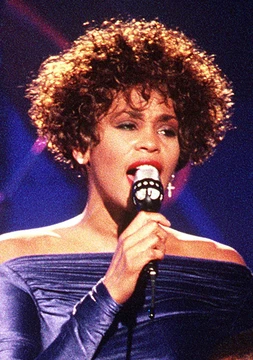
Bobby Brown
The New Jack Swing pioneer whose intertwined story with Whitney defined a generation of pop culture.

Bobby Brown is an American singer, songwriter, rapper, and dancer who rose to fame as a founding member of the R&B/pop vocal group New Edition. Alongside frequent collaborator Teddy Riley, he is recognized as a pioneer of new jack swing: a fusion of hip-hop and R&B. Within the Whitney Houston universe, he occupies a dual role: a celebrated solo artist in his own right, and the husband whose personal and professional entanglement with Whitney shaped one of the most scrutinized relationships in music history. Fans of the Whitney Houston canon often encounter Bobby Brown as both a musical collaborator and a figure whose public struggles contrasted sharply with Whitney's soaring career. His story is inseparable from hers in the popular imagination, yet his own artistic contributions deserve recognition as a distinct thread in 1980s and 1990s popular music.
- Role
- Singer, songwriter, rapper, and dancer
- Genre
- New jack swing (fusion of hip-hop and R&B)
- Era of prominence
- Late 1980s through mid-1990s
- Notable association
- Spouse of Whitney Houston (married 1992, divorced 2007)
- Key group affiliation
- New Edition (founding member)
- Signature hit era
- 1988–1992
Verified Timeline
Lore & Background
Bobby Brown first gained attention as a founding member of New Edition, contributing to hits like "Candy Girl", "Cool It Now", and "Mr. Telephone Man". He left the group in 1985 to pursue a solo career but later reunited with them for their Billboard 200 number-one album Home Again (1996). His debut album, King of Stage (1986), featured the number-one R&B single "Girlfriend". His second album, Don't Be Cruel (1988), brought him commercial and critical success, producing five Billboard Hot 100 top 10 singles, including the number-one hit "My Prerogative" and the Grammy Award–winning "Every Little Step". In 1989, Brown contributed two songs to the Ghostbusters II soundtrack. His next album, Bobby (1992), was certified 3× Platinum by the RIAA and featured the singles "Humpin' Around", "Get Away", and "Good Enough". His marriage to Whitney Houston in 1992 placed him at the center of the music world's most-watched household. Their widely-publicized relationship was marked by drug issues and domestic disputes, attracting significant media attention. Brown and Houston starred in the 2005 reality television series Being Bobby Brown. Houston filed for divorce in 2006, and it was finalized a year later in 2007. In the Whitney Houston fan community, Bobby Brown is a complex figure. Some fans focus on his musical legacy and the era he helped define; others view him through the lens of the relationship's turbulence.
In Their Own Story
The stage lights of a mid-'80s R&B club in Boston hum with a low amber glow. Bobby Brown steps up to the microphone, the bassline already thumping through the floorboards beneath his dancing shoes. The crowd—mostly teenagers in oversized jackets—shouts his name before he even opens his mouth. He grins, tilts his head, and lets the beat breathe for two bars. When he finally sings, the room goes still. The synth hits stack behind him like a wall of sound, and he rides that wave with a vocal that is at once smooth and streetwise. In the back row, a young woman with a microphone case strapped to her back watches, mouthing the words she doesn't yet know by heart. She will spend the next decade building a career that will, in time, share a headline with his. But tonight, in this small club, the night belongs to the beat, the bass, and the kid from Boston who just made a room full of strangers feel like they were in on a secret.
Reader's Guide
Bobby Brown's place in the Whitney Houston universe begins long before the two names were paired in headlines. In the early 1980s, he was part of New Edition, a vocal group that gave him his first taste of the stage. By the mid-1980s he had gone solo and landed squarely in the New Jack Swing wave, a production movement that blended hip-hop drum patterns, bright synth stabs, and soulful singing into a sound that dominated R&B radio. His late-'80s records became anthems of the era, and he was recognized as one of the defining male voices of that moment. His songwriting and production work extended beyond his own singles. He contributed to the broader sonic landscape of 1980s and early-1990s R&B, helping to shape the rhythmic and textural vocabulary that artists across the genre drew from. For fans exploring the Whitney Houston canon, understanding Bobby Brown's musical world provides essential context for the era in which Whitney's own career was taking off. The marriage in 1992 fused two of the industry's biggest stories into one. What followed—years of public scrutiny, personal struggle, and eventual separation in 2007—became a defining narrative arc in pop-culture memory. For Whitney Houston fans, Bobby Brown is both a musical peer of the same golden era and a figure whose story is inextricable from Whitney's. Approaching his legacy with that dual lens—artist first, then the man in the shared narrative—offers the most complete picture of his role in this universe.
Did You Know?
- Bobby Brown was a founding member of New Edition, which was founded in 1980 under the name 'The Bricks' by 12-year-old Brown and childhood friends Michael Bivins and Ricky Bell.
- Brown's album Don't Be Cruel (1988) made him the youngest male artist to top the Billboard 200 with a studio album at age 19, a record later broken by Justin Bieber in 2010.
- Brown won the Grammy Award for Best Male R&B Vocal Performance in February 1990 for the single 'Every Little Step'.
- Brown and Whitney Houston's duet 'Something in Common' from his 1992 album Bobby became a hit in the UK, peaking at No. 16.
- Brown and Houston starred together in the 2005 reality television series Being Bobby Brown.
More in Lore & History
Related in Whitney Houston
Links follow this subject's own source article.
Elsewhere in the Whitney Houston universe
Spotted an error? Know more?
This is a living reference — every entry is fact-audited, and reader corrections feed straight into our audit queue. Suggest an edit · See this site's audit record