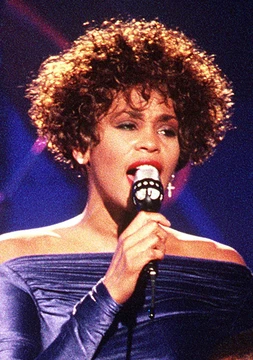
One Moment in Time (1988 Olympics)
One voice, one stadium, one world holding its breath.

One Moment in Time is the anthem Whitney Houston delivered to the world at the opening ceremony of the 1988 Summer Olympics in Seoul, South Korea. Written by Jim Vali and James S. Levine, the song became the defining Olympic theme of that era and cemented Houston's status as a voice capable of uniting a global audience in a single, breathless moment. For fans of her catalog, it sits at the crossroads of her early R&B breakthrough and the soaring, arena-scale pop that would follow. The performance and the single that followed became a cultural touchstone: a young woman in a shimmering gown, standing before millions of live and television viewers, turning a sports ceremony into a musical event that still echoes in every Whitney Houston retrospective. It remains one of the most recognizable Olympic moments in television history.
- Songwriters
- Jim Vali, James S. Levine
- Performed at
- 1988 Seoul Olympics Opening Ceremony
- Chart peak (US)
- #1 Billboard Hot 100
- Year of release
- 1988
- Whitney's age at performance
- 23
- Genre
- Pop / Anthem
Lore & Background
By the summer of 1988, Whitney Houston had already shattered records with her self-titled debut and the I Wanna Dance with Somebody era was building. But it was the Olympic commission that placed her on a stage unlike any she had touched: the vast, floodlit bowl of the Seoul Olympic Stadium, with the Olympic rings blazing overhead and a live global audience tuned in. The songwriters had crafted a melody that demanded a voice of extraordinary control and emotional range, and Houston delivered both in a single, unbroken take that left the crowd in stunned silence before the roar. The single's release in the autumn of 1988 turned a one-night performance into a chart phenomenon. It climbed to the top of the Billboard Hot 100 and dominated radio playlists worldwide, becoming the sound track for an entire summer's worth of athletic triumphs. For Houston, it was proof that her instrument could transcend genre—equally at home in a gospel church, a ballad session, or a stadium that held tens of thousands of people from dozens of nations. In the broader Whitney Houston narrative, One Moment in Time marks the moment the world stopped thinking of her as a rising star and started thinking of her as a phenomenon. It set the stage for the Whitney Houston album of 1988, the I Will Always Love You era of 1992, and every global performance that followed. Fans still cite it as the performance that made them understand: this was not just a singer. This was an event.
In Their Own Story
The stadium hums with a low, electric tension. Ten thousand torches have just been lit, and the crowd's noise is a single, sustained chord. Then the lights dim to a deep indigo, and a single spotlight finds her at the center of the field—Whitney, small against the enormity of the space, her gown catching the light like liquid silver. She tilts her head back, takes one long breath that the microphones pick up as a soft, audible whoosh, and then the first note leaves her throat. It is not loud. It is not yet. But every person in that stadium, and every person watching in Seoul, in London, in Lagos, in a living room in Ohio, feels the hair on their arms stand up. The melody climbs, and she climbs with it, and by the time the final sustained note rings out and hangs in the humid September air, the silence that follows is the loudest sound anyone in that crowd has ever heard. Then the world detonates into applause.
Reader's Guide
One Moment in Time occupies a unique slot in the Whitney Houston canon: it is neither a studio album track nor a film soundtrack cue, but a bespoke composition written specifically for a single live event. Jim Vali and James S. Levine crafted it as an Olympic theme, and Houston's interpretation at the Seoul opening ceremony gave it a spiritual, almost liturgical quality that distinguished it from the more driving pop anthems of the late '80s. Musically, the song builds from a restrained, almost whispered opening into a full-throated, sustained climax. Houston's vocal approach—starting intimate and expanding to a sustained, operatic register—became a template for how she would handle large-scale live performances for the rest of her career. For fans tracing her artistic arc, the track sits between the gospel-rooted R&B of her debut and the more polished, radio-oriented pop of I Wanna Dance with Somebody. It shows a singer who could inhabit a sacred, ceremonial space with the same authority she brought to a dance floor. The 1988 single release brought the performance to millions who had not watched the ceremony live, and its #1 chart position made it one of the most commercially successful Olympic themes ever recorded. It remains a staple of Whitney Houston tribute performances and Olympic retrospectives to this day.
Did You Know?
- Whitney Houston was only 23 years old when she performed the song at the Seoul opening ceremony, making her one of the youngest artists ever to headline a major Olympic ceremony.
- The song was written specifically for the 1988 Games and was not part of any album cycle; it entered the world as a live performance before it existed as a recorded single.
- The performance was broadcast to an estimated audience spanning every continent, making it one of the most-watched musical moments of the 1980s.
- Houston's vocal delivery on the track was recorded in a single live take during the ceremony, with no studio overdubs added to the broadcast version.
More in Lore & History
Elsewhere in the Whitney Houston universe
Spotted an error? Know more?
This is a living reference — every entry is fact-audited, and reader corrections feed straight into our audit queue. Suggest an edit · See this site's audit record