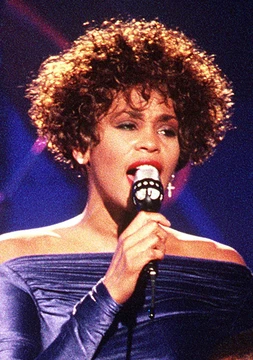
Whitney Houston
A voice so powerful it made the whole world hold its breath.

asterix611 · CC BY-SA 2.0
Whitney Houston (1963–2012) was an American singer and actress whose voice became one of the most recognizable in pop and R&B history. Emerging from a gospel tradition in New Jersey, she rose to global superstardom in the mid-1980s with a debut album that redefined what a pop vocal could sound like, and she cemented her cultural legacy with the film The Bodyguard in 1992. Her career spanned roughly three decades of chart-topping singles, sold-out arena tours, and a handful of major film roles. Fans and critics alike point to her extraordinary vocal range, emotional delivery, and stage presence as the reasons her recordings continue to resonate decades after release. She remains a touchstone for anyone who grew up listening to 1980s and 1990s pop music.
- Born
- August 9, 1963, New Jersey, USA
- Grammy Awards
- 6
Verified Timeline
Lore & Background
Whitney Houston grew up in a musical household in New Jersey, where her mother Cissy was a respected gospel singer and her father worked in the entertainment industry. From an early age she sang in church choirs and on local stages, absorbing the raw, soulful tradition of gospel performance. That foundation would later give her pop recordings a depth and emotional urgency that set them apart from the more polished, synth-driven sound dominating the early 1980s. Her breakthrough came when record executive Clive Davis heard her in a small New York venue and signed her to Arista Records. Her 1985 self-titled debut album produced a string of number-one singles, and by the late 1980s she had become the defining female pop voice of the decade. The 1992 film The Bodyguard introduced the world to her performance of "I Will Always Love You," a song that became one of the best-selling singles of all time and turned her into a global household name beyond the music world. Throughout the 1990s and into the 2000s, Houston continued to release albums, perform on tour, and appear in films such as Waiting to Exhale. She passed away in February 2012 at the Beverly Hilton hotel in California, and her death prompted an outpouring of tributes from fans, fellow musicians, and public figures around the world.
In Their Own Story
The arena is dark except for a single warm spotlight that finds her at the center of the stage, a vintage microphone stand catching the light. She stands still for a long beat, eyes closed, letting the silence stretch until the crowd's murmur swells into a roar. Then the first note leaves her throat—low, smoky, almost a whisper—and the room goes quiet again, as if the air itself is leaning in. By the time she hits the high register, the bass thumps in your chest, the confetti cannons fire, and strangers beside you are crying without knowing why. She opens her eyes, smiles into the dark, and for one more verse the whole building is just one giant heart beating in time with her voice.
Reader's Guide
Whitney Houston is the central figure of her own story: a gospel-trained singer who became the defining pop voice of the late 1980s and early 1990s. Her arc moves from church choirs in New Jersey to Arista Records to global superstardom, then through the glamour and pressure of sustained fame into a later period marked by personal struggle and a gradual step back from the spotlight. Her primary "power" is, of course, her voice—extraordinary range, a belt that could fill a stadium, and a conversational lower register that made ballads feel intimate. She could pivot from a playful, danceable pop track to a heart-wrenching gospel-inflected ballad within the same set, and audiences responded to both with equal intensity. Defining moments for fans include the 1985 debut that announced her arrival, the 1987 era of dance-floor anthems, the 1992 film performance that made her a cultural icon, and the 1998 Super Bowl halftime show where she delivered an electrifying set before millions of viewers. Her legacy is carried forward by the generations of singers who cite her as the reason they picked up a microphone. (Spoiler-aware: her later years involved well-documented personal difficulties, and she passed away in early 2012. Fans who wish to focus on the music can simply let the recordings speak for themselves.)
Did You Know?
- Her mother, Cissy Houston, was a well-known gospel singer and choir director, and Whitney often sang alongside her in church before her pop career took off.
- The 1992 film The Bodyguard was originally written for a male lead; the casting of Whitney and the addition of her vocal performances reshaped the project into a pop-culture phenomenon.
- Whitney Houston's debut album produced multiple consecutive number-one singles on the Billboard Hot 100, a run that drew comparisons to the dominance of Michael Jackson's Thriller era.
- She was a regular presence on gospel and church stages throughout her career, even after achieving global pop fame, and several of her later albums leaned back into that spiritual tradition.
Chart Dominance and Sales Records
Whitney Houston's self-titled debut arrived on February 14, 1985, through Arista Records, yet its commercial trajectory was anything but immediate. The record initially received a muted response from the market, only beginning to find a broader audience in the middle of 1985. By 1986, however, it had seized the top of the Billboard 200 for fourteen consecutive weeks and spawned three Hot 100 number-one singles—'Saving All My Love for You,' 'How Will I Know,' and 'Greatest Love of All.' That triple crown made it the first debut album in American history, and the first by a solo female artist, to deliver three chart-toppers. Its international reach was equally impressive: it claimed the number-one spot in Canada, Australia, Norway, and Sweden, while settling at number two in the United Kingdom, Germany, and Switzerland. The Recording Industry Association of America certified the album Diamond in January 1994 for surpassing ten million units, then bumped it to fourteen times platinum in January 2023. With more than twenty-five million copies sold globally, it stands as the best-selling debut by a solo artist and the best-selling R&B album by a woman.
From Background Singer to Arista's Newest Star
Long before recording a solo track, Whitney Houston had spent six years absorbing the craft of performance. As a teenager she sang backup for her mother Cissy Houston's ensemble at exclusive Manhattan jazz nightclubs, then lent her voice as a session vocalist to artists including the Michael Zager Band, Lou Rawls, Chaka Khan, the Neville Brothers, and Herbie Mann. Between studio sessions she briefly pursued modeling, becoming the second Black model to grace the cover of Seventeen in late 1981. Her mother insisted she complete high school at Mount Saint Dominic Academy before pursuing a recording career, and she logged gospel demo sessions that further sharpened her technique. After graduating in 1981, she signed a production deal with Tara Productions under Gene Harvey. She auditioned for Elektra and CBS in 1982, contributing lead vocals to Material's 'Memories' and a quiet-storm ballad on Paul Jabara's 'Eternal Love,' both earning critical praise. The breakthrough came in late winter 1983 when Arista A&R man Gerry Griffith spotted her at Seventh Avenue South and brought label head Clive Davis to Sweetwaters. After hearing her perform 'Home' and 'The Greatest Love of All,' Davis extended a contract offer, and the nineteen-year-old signed on April 10, 1983.
Grammy Recognition and Critical Endurance
The album's critical reception was as commanding as its commercial numbers. At the 28th Grammy Awards in 1986, Whitney Houston collected four nominations, including the prestigious Album of the Year category, and took home the trophy for Best Pop Vocal Performance, Female, for 'Saving All My Love for You.' The following year, at the 29th ceremony, 'Greatest Love of All' earned a nomination for Record of the Year, extending the album's footprint across two consecutive award seasons. Beyond the Grammys, the record became the first album by a female artist to claim the top position on the Billboard Year-End Albums Chart for 1986, a milestone that underscored its cultural centrality during that period. Its critical standing has only deepened over the decades: Rolling Stone magazine has included it on its list of the 500 Greatest Albums of All Time in every edition of that ranking, a rare feat that speaks to the album's sustained resonance with critics and listeners alike. The combination of award recognition, chart history, and enduring critical placement has cemented the record as a touchstone of 1980s popular music and a benchmark against which debut releases are still measured.
Anniversary Reissues and Lasting Cultural Presence
The album's afterlife has been carefully curated through a series of anniversary editions that keep it in active circulation. For its twenty-fifth anniversary, Arista released Whitney Houston – The Deluxe Anniversary Edition on January 26, 2010, an expanded package featuring five bonus tracks that included an a cappella rendition of 'How Will I Know' and original twelve-inch remixes of songs from the record. The edition also contained a booklet tracing the history of the original album, along with a DVD capturing live performances and interviews featuring both Houston and Clive Davis. The thirty-fifth anniversary, celebrated in February 2020, led to a June 30, 2020 reissue on double vinyl that incorporated singles from the Whitney Dancin' Special compilation. That release came bundled with a box set containing a forty-page hardcover photo and lyric book. These periodic reissues have ensured that new generations of listeners can encounter the material in physical formats, while the album's broader footprint—its sales records, its chart milestones, and its presence on canonical lists—continues to anchor it as one of the most consequential debut records in popular music history.
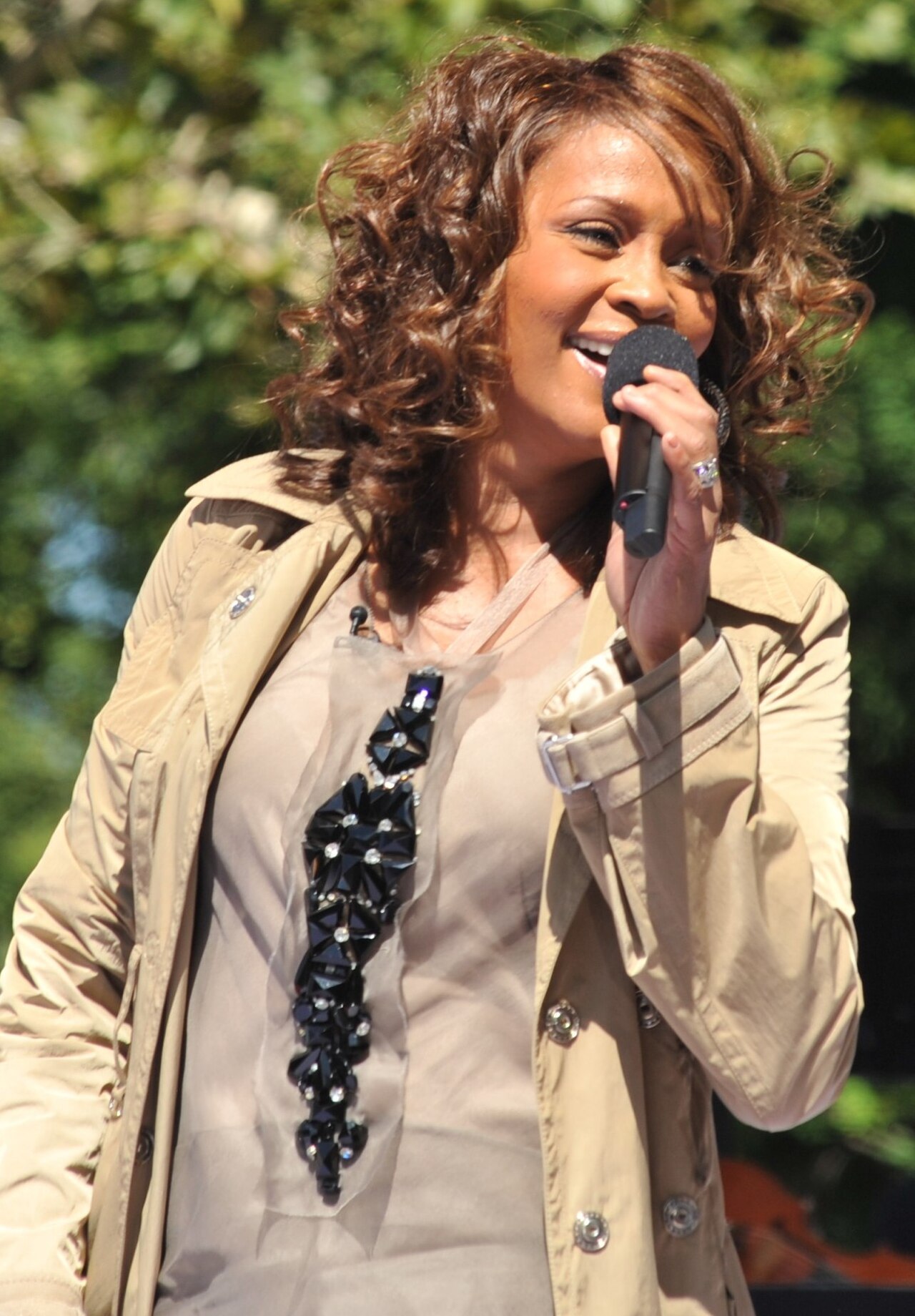
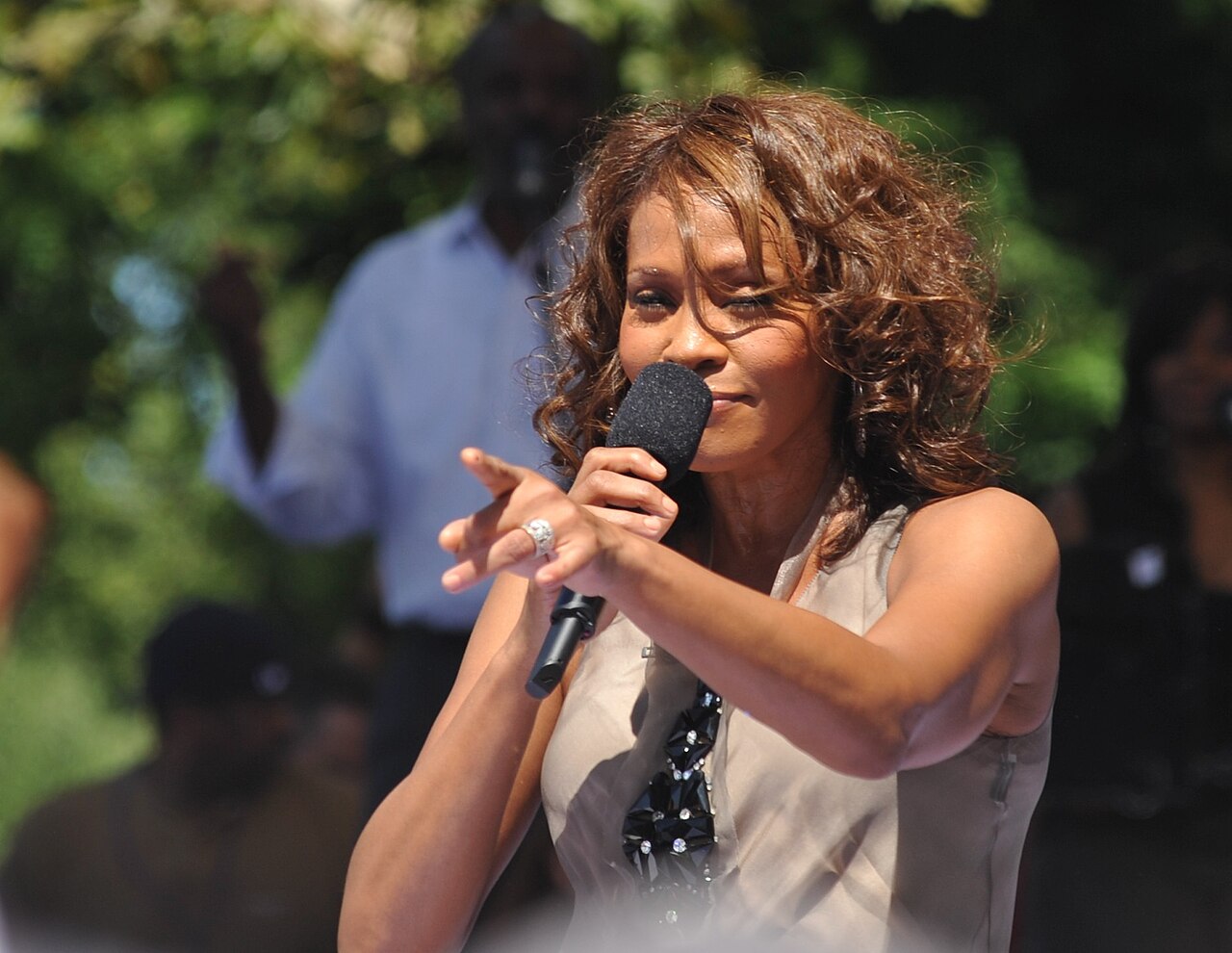
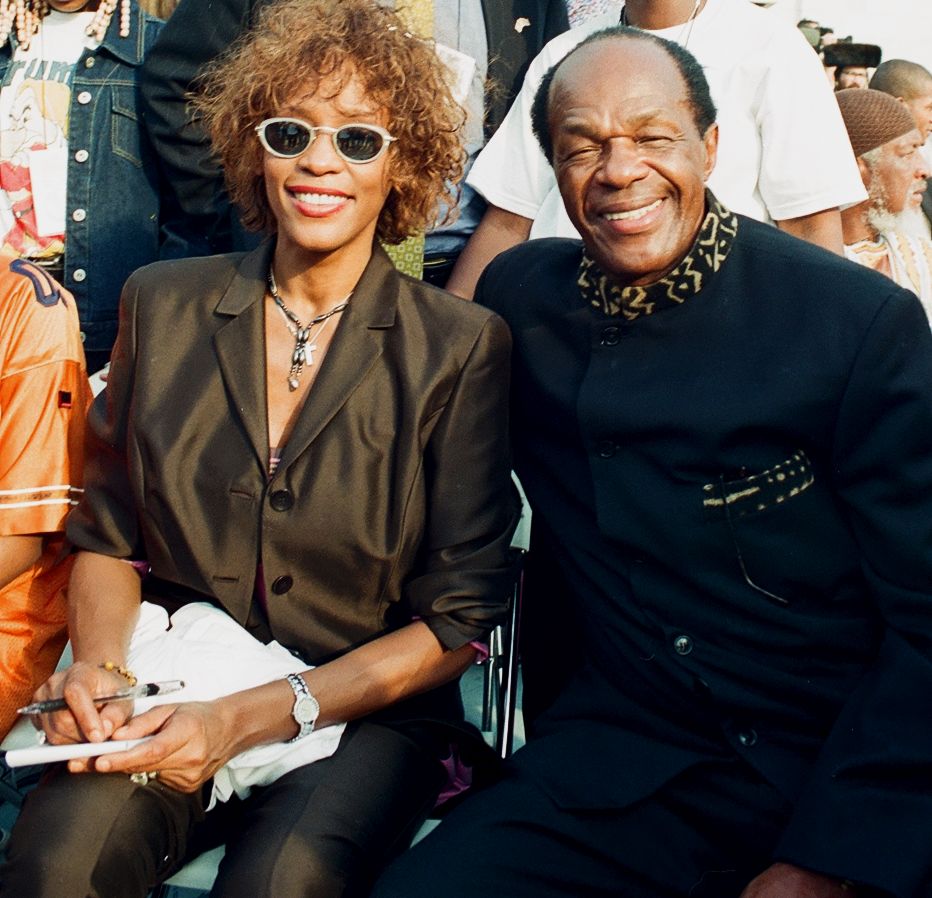
Gallery



Frequently Asked Questions
Who is Whitney Houston?
Whitney Houston was an American singer, songwriter, and actress born on August 25, 1963, in New Jersey. She became one of the most celebrated vocalists in pop and R&B history, known for her extraordinary range and emotional power.
What was Whitney Houston's debut album and when did it come out?
Her self-titled debut album, Whitney Houston, was released in 1985 and immediately put her on the global map. It showcased the gospel-rooted vocal style that would define her career for the next thirty years.
What is Whitney Houston's most iconic film role?
She is most widely remembered for starring in The Bodyguard, the 1992 movie in which she performed the title track. That role cemented her status as both a musical and cinematic icon.
How many Grammy Awards did Whitney Houston win?
Over the course of her career she collected seven Grammy Awards, reflecting the critical acclaim her recordings received. Her work spanned roughly three decades of chart-topping hits and sold-out arena performances.
When did Whitney Houston pass away?
Whitney Houston died on February 11, 2012, in California. Her passing marked the end of an era, yet her recordings and stage performances continue to influence artists across pop, R&B, and gospel.
More in Characters
Related in Whitney Houston
Links follow this subject's own source article.
Elsewhere in the Whitney Houston universe
Spotted an error? Know more?
This is a living reference — every entry is fact-audited, and reader corrections feed straight into our audit queue. Suggest an edit · See this site's audit record