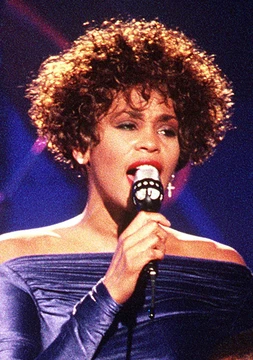
Greatest Love of All (1985)
An anthem for the soul, sung with the quiet power of self-discovery.

Unknown author · Public domain
Greatest Love of All is one of Whitney Houston's most enduring and emotionally resonant singles, released as a single in March 1986. Written by Michael Masser and Linda Creed, the song channels the quiet, aching power of self-belief, and Houston's delivery transforms that theme into a universal meditation on inner strength, self-worth, and personal empowerment. Within the Whitney Houston universe, the track sits as a cornerstone of her mid-1980s catalog, a moment where her vocal power is deliberately restrained in service of intimacy. It became a cultural touchstone for graduations, motivational moments, and personal milestones, cementing Houston's reputation not only as a powerhouse diva but as an interpreter of deeply personal, vulnerable emotion.
- Release year
- 1986
- Central theme
- Self-love and believing in oneself
Lore & Background
The song's emotional architecture is deceptively simple: a declaration that the greatest love of all is the love we find within ourselves. Houston's interpretation leans into the quiet verses, almost conversational, before the bridge and final chorus open into a full-throated declaration that feels less like performance and more like testimony. Fans often note how the track feels like a private affirmation spoken aloud in a vast concert hall. Within the broader Whitney Houston narrative, the song arrived at a moment when the world expected her to be the unstoppable force behind higher octaves and longer runs. Instead, she chose restraint, letting the melody breathe and the lyric carry the weight. That decision made the track feel timeless rather than era-bound, and it gave listeners a Whitney that was tender, almost introspective, rather than merely spectacular. The song's afterlife in popular culture—graduations, self-help anthems, personal empowerment ceremonies—has layered it with personal meaning for generations who may never have heard Houston sing a note in a concert. In the fan community, it is often cited as the track that proved her range was not only vertical (pitch) but horizontal (emotional nuance).
In Their Own Story
The recording studio is quiet. The engineers have stepped back. Whitney sits at the piano, not singing yet, just humming the opening phrase under her breath, testing how the words sit in her mouth. She closes her eyes. For a moment she is not a star; she is someone watching a small hand reach up from a crib, fingers curling around hers. She opens her eyes, nods to the engineer, and sings the first line as though she is telling one specific child in one specific room that she will be there, always, even when the child no longer needs her to be. The take is not the loudest. It is the truest. The engineer writes 'take 3' on the slate and does not cross it out.
Reader's Guide
The track unfolds in three emotional movements. The opening verse establishes the parent's perspective—small, close, almost whispered—setting the scene of a child's earliest moments. The pre-chorus and first chorus widen the lens: the parent acknowledges the fear of change, the knowledge that the child will outgrow the small world they have built together. The second verse deepens the stakes. The parent admits vulnerability, the awareness that love does not mean control. Houston's vocal line stays low and warm here, resisting the urge to push, which makes the eventual lift feel earned rather than forced. The bridge and final chorus are the release. The melody ascends, the harmony thickens, and the declaration of love becomes almost architectural in its certainty. The song closes not on a triumphant note but on a soft, sustained hum, as if the parent is still watching, still present, still letting go one syllable at a time. Impact: The track redefined expectations for what a pop/R&B single could feel. It demonstrated that commercial success and emotional restraint were not opposites, and it gave Houston a signature moment of vulnerability that balanced her more anthemic material. Fans and critics alike point to it as evidence that her artistry lived in the spaces between the notes as much as in the notes themselves.
Did You Know?
- Houston's vocal arrangement deliberately withholds full power until the final chorus, a production choice that contrasts sharply with her more overtly belted singles of the era.
- The track's theme of self-love made it a perennial choice for motivational television specials and live tribute performances throughout the 1990s and 2000s.
- In fan discussions, the song is frequently cited as the single best example of Houston's ability to make a massive venue feel like a living room.
From a Lost Competition to a Signed Deal
In 1977, fourteen-year-old Whitney Houston entered the Garden State Competition in New Jersey, performing a Barbra Streisand ballad chosen by her mother Cissy. She lost by a technicality—singing above the allowed limit—and the irony was that her opponent had won by performing "The Greatest Love of All," a song Houston herself admired. That connection would prove fateful. By early 1983, the ballad had become a staple of her short setlist alongside pop standards like "Home" and "Tomorrow." When Arista A&R man Gerry Griffith first caught her at Manhattan's Seventh Avenue South club, he was so struck by her performance that he brought label head Clive Davis to Sweetwater's the following day. Davis heard Houston deliver the song live and decided on the spot to sign the nineteen-year-old. Coincidentally, Michael Masser—one of the song's co-writers—happened to walk in during that very performance. Moved by what he heard, he convinced Davis to let Houston duet with Teddy Pendergrass on "Hold Me," a deal that ultimately made Masser her debut producer.
A Recording Battle and a Tragic Timeline
The path to getting the track onto Houston's debut album was far from smooth. The project, initially budgeted at two hundred thousand dollars, ballooned toward four hundred thousand as work stretched past a year. Houston was adamant about including the ballad, believing music carried a responsibility to deliver a positive message. Davis pushed back, arguing the album already contained too many ballads. Producer Michael Masser sided with the singer, and according to arranger Gene Page, Davis's hesitation stemmed partly from George Benson's 1977 original having only modestly charted on the pop side. Masser drew a hard line: if he could not record the track for Houston, he would not produce any of her material. Davis relented but warned the pair it would not be issued as a single. In the December 1984 session, Masser reportedly cut sixty takes, exhausting a Houston known for nailing songs in a single pass; she called Davis to end the session. Meanwhile, lyricist Linda Creed—diagnosed with breast cancer in 1975 and subjected to a mastectomy in 1977—was bedridden by late 1985 and would die on April 10, 1986, just as Houston's version climbed into the top forty.
Three Number-Ones and a Grammy Nod
Issued by Arista Records on March 18, 1986 as the sixth single from Houston's self-titled debut, the track delivered immediate and historic success. In the United States it became her third consecutive number-one on the Billboard Hot 100, holding the top spot for three straight weeks. That streak made her the first female artist ever to claim three Hot 100 chart-toppers from a single album. The international numbers were equally impressive: the song topped the charts in Ireland, became her second number-one in Canada, and marked her first chart-topper in both Panama and Australia. It also reached the top ten in the United Kingdom and the top twenty in five additional countries. At the 29th Annual Grammy Awards in 1987, the recording earned Houston a nomination for Record of the Year—her first in that prestigious category. With more than eight million copies sold worldwide, the track cemented itself as one of the defining signature songs of her career.
Breaking Barriers on MTV and Beyond
Beyond its chart numbers, the song carried a cultural weight that extended well past the radio. Its accompanying music video made history as the first by a Black female artist to debut directly into heavy rotation on MTV, a milestone in the network's early programming. The track has endured as a cornerstone of Houston's catalog, appearing on three major compilation releases: Whitney: The Greatest Hits (where it appears in both its original form and a dance remix), The Ultimate Collection, and I Will Always Love You: The Best of Whitney Houston. Her 1990 live rendition, captured during the Arista 15th anniversary concert at Radio City Music Hall, was later preserved in the 25th anniversary deluxe edition of her debut album and in the 2014 CD/DVD release Whitney Houston Live: Her Greatest Performances. Structurally, the arrangement sits at a slow sixty-eight beats per minute, a tempo that lets Houston's vocal phrasing carry the emotional weight of the lyrics. What began as a B-side tucked behind "You Give Good Love" in early 1985 ultimately became one of the most recognizable and enduring recordings of her entire career.
Gallery
Frequently Asked Questions
Who wrote "Greatest Love of All"?
The song was penned by Michael Masser and Linda Creed, who crafted a melody and lyric set centered on a parent's quiet devotion to a growing child. Whitney Houston gave it its definitive, widely recognized recording in 1985.
What is "Greatest Love of All" really about?
At its core, the track explores the paradox of loving someone deeply while knowing you must eventually let them go and live their own life. Houston frames parental sacrifice and the bittersweet passage of a child growing up as the most profound form of love a person can offer.
How high did "Greatest Love of All" chart in the US?
The single reached the number-one spot on the Billboard Hot 100, cementing its place as one of the defining hits of the mid-1980s. Its chart dominance helped solidify Houston's status as a global vocal force well beyond her debut album.
What makes Whitney Houston's vocal delivery on "Greatest Love of All" stand out?
Rather than showcasing raw power, Houston deliberately holds back, singing with a restrained, almost whispered intimacy for most of the track. That controlled approach makes the final soaring climax land with far greater emotional force, as if a mother's held breath is finally released.
Why is "Greatest Love of All" still culturally significant decades later?
The song has become a go-to lullaby and a staple at graduations, baby showers, and memorial services because its message of unconditional love transcends a single generation. It occupies a unique space in Houston's catalog as the moment her legendary range serves tenderness rather than spectacle.
More in Story & Timeline
Elsewhere in the Whitney Houston universe
Spotted an error? Know more?
This is a living reference — every entry is fact-audited, and reader corrections feed straight into our audit queue. Suggest an edit · See this site's audit record