The Billboard Music Awards
Where the charts crowned a queen and the world watched her reign.

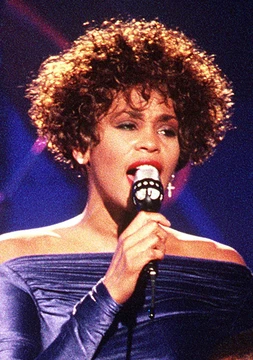
The Billboard Music Awards stand as one of the most prominent annual celebrations of popular music in the United States, presented by Billboard magazine. In the Whitney Houston universe, the BMAs represent a recurring stage where her chart dominance and cultural impact were publicly recognized year after year, particularly during the early 1990s when she was arguably the most in-demand recording artist on the planet. For fans, the BMAs are not merely a trophy night but a living archive of Whitney's trajectory: from a rising star collecting her first major industry nods to the undisputed queen of pop and R&B sweeping multiple categories. The ceremony's blend of fan voting and chart-driven recognition made it a uniquely democratic mirror of the public's devotion to her music.
- Presenter
- Billboard magazine
- First ceremony
- 1990
- Frequency
- Annual
- Whitney Houston status
- Multiple-time winner
- Genres recognized
- Pop, R&B, Hip-Hop, Country, Gospel, and others
- Format
- Televised awards ceremony with live performances
Lore & Background
The Billboard Music Awards occupy a special place in Whitney Houston fandom because they sit at the intersection of commercial achievement and artistic prestige. Unlike purely peer-voted ceremonies, the BMAs draw heavily on Billboard's own chart data and reader engagement, meaning Whitney's record-breaking singles and albums translated directly into trophy counts. Her early-1990s sweep of categories became a cultural shorthand for the era's pop landscape: one artist, one voice, one undeniable force. The ceremony's evolution mirrors Whitney's own career arc. In its early years, the BMAs were a relatively intimate industry gathering. As Whitney's global profile exploded through the early 1990s, the event grew into a massive televised production with elaborate staging, and her appearances became marquee moments. Fans still reference the energy of those nights—the confetti, the standing ovations, the way the audience seemed to collectively exhale when her name was called. For the Whitney Houston community, the BMAs also serve as a touchstone for intergenerational fandom. Newer listeners discovering her catalog often encounter BMA coverage in retrospectives, which contextualizes just how dominant her presence was at the height of her career. The awards become a narrative anchor: proof that her impact was not just critical but commercial, not just American but global.
In Their Own Story
The backstage corridor hummed with the low electric buzz of stage monitors and the distant roar of a packed arena. Whitney stood in the wings, one hand resting on the cool metal railing, watching the lights paint the stage in slow amber waves. Her team whispered over the cue sheet, but her eyes were fixed on that empty spot center-stage where, in ninety seconds, she would open her mouth and the room would forget to breathe. The Billboard logo glowed on the screen behind her like a sun she was about to walk into. She exhaled, smiled at no one in particular, and stepped forward.
Reader's Guide
The Billboard Music Awards are an annual, televised ceremony presented by Billboard magazine, recognizing the year's top achievements across pop, R&B, hip-hop, country, gospel, and other genres. The event blends fan and reader engagement with Billboard's proprietary chart data to determine winners, making it a uniquely data-driven celebration of commercial and cultural impact. Whitney Houston's relationship with the BMAs is central to her legacy. During the early 1990s, her string of chart-topping singles and multi-platinum albums made her a perennial winner and a headlining performer. Her presence at the ceremony signaled not just one artist's success but a shift in the industry's center of gravity. For fans, the BMAs function as a recurring narrative beat: a moment where the industry publicly acknowledges what the audience already knew. The ceremony's goals—celebrating hit records, spotlighting rising talent, and honoring legacy artists—align naturally with Whitney's story of sustained excellence. She was both the recipient and the standard-bearer, the artist against whom the year's other nominees were measured. In the broader Whitney Houston universe, the BMAs sit alongside the Grammys and the American Music Awards as the trinity of major US award nights. Each offers a different lens: the Grammys for peer recognition, the AMAs for pure fan voting, and the BMAs for the intersection of chart performance and public engagement. Whitney's dominance across all three underscores the breadth of her appeal.
Did You Know?
- The Billboard Music Awards began in 1990, meaning Whitney Houston's early-1980s breakthrough years predated the ceremony, and she entered the BMA era already as an established superstar.
- Because the BMAs draw on Billboard's own chart data, Whitney's record-breaking singles translated almost directly into award eligibility, making her a near-automatic frontrunner in multiple categories.
- The ceremony has grown from a relatively modest industry dinner into a large-scale televised production with elaborate staging, and Whitney's early-1990s appearances helped define its modern spectacle.
- For fans building a Whitney Houston timeline, BMA wins serve as useful commercial milestones that complement the more peer-focused Grammy history.
More in Factions & Groups
Elsewhere in the Whitney Houston universe
Spotted an error? Know more?
This is a living reference — every entry is fact-audited, and reader corrections feed straight into our audit queue. Suggest an edit · See this site's audit record