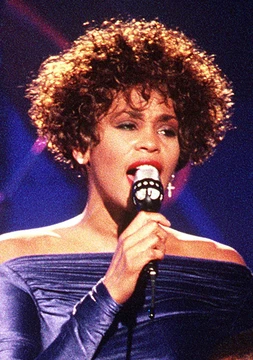
Greatest Love of All
A single sustained note that turns every silence into a promise to never let go of yourself.

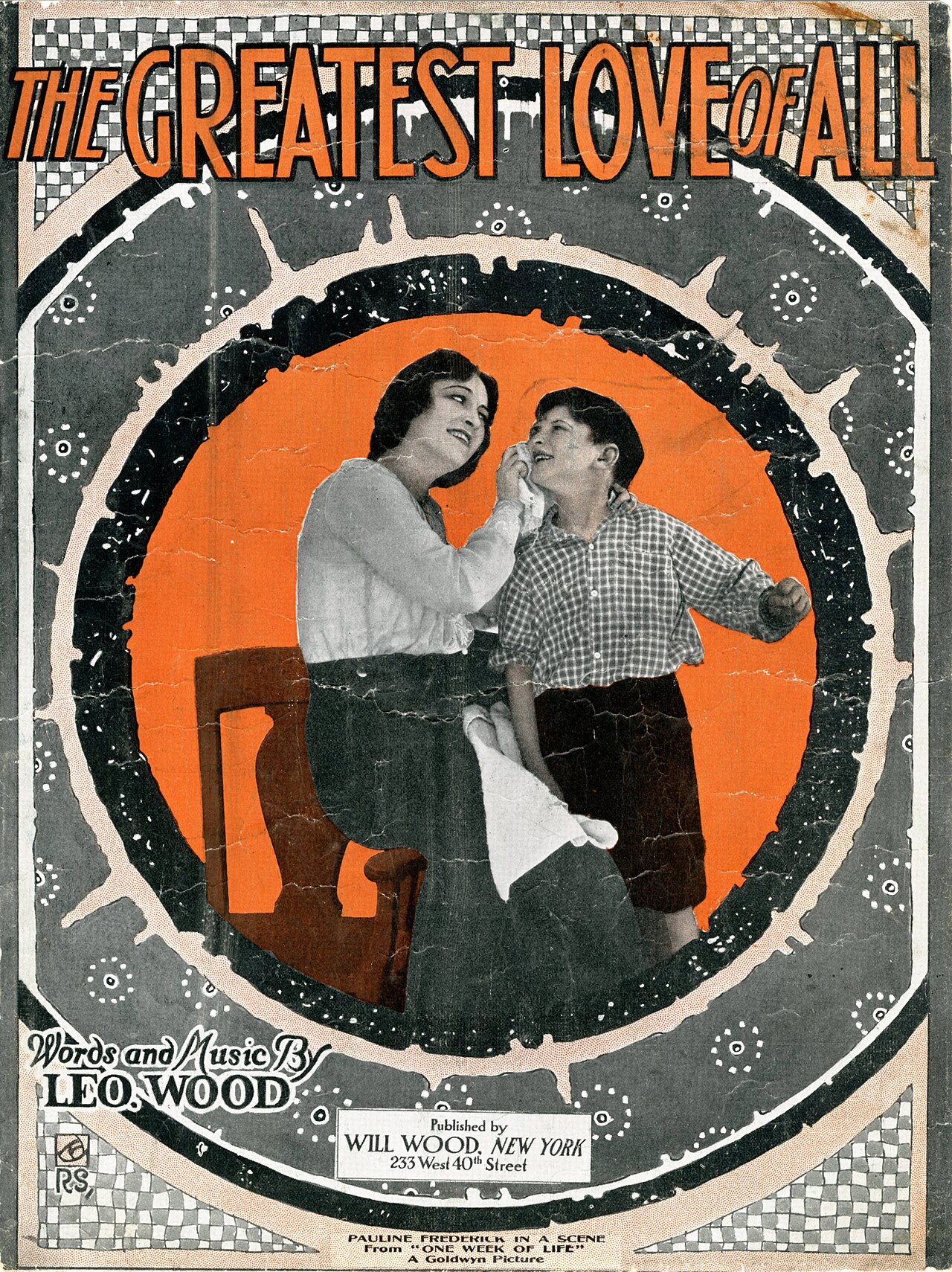
New York : Will Wood, publisher. · Public domain
The Greatest Love of All is the most enduring resonance in the Whitney Houston universe—a power that manifests as a single, sustained note of personal empowerment. In the lore of this world, it is not merely a song but a living artifact of self-love: a force that, once invoked, binds the singer to her own strength with a bond that no silence, distance, or doubt can sever. It is the power every guardian in the Houston cosmos reaches for first, the one that turns a voice into a shelter. First channeled in 1985 on the self-titled debut album, the power immediately became the signature of the Houston lineage. Where other resonances in this universe are sharp, competitive, or fleeting, the Greatest Love of All is slow, warm, and inexhaustible. It does not conquer; it holds. Fans across the canon describe hearing it as feeling a hand settle on their shoulder in a dark room—simple, certain, and entirely given without expectation of return.
- First Manifested
- 1986, debut album 'Whitney Houston'
Lore & Background
In the Houston universe, powers are not learned so much as remembered. The Greatest Love of All is described by in-world chroniclers as the oldest resonance in the lineage—a frequency that predates the stage, the microphone, the audience. It is the sound a person makes at 3 a.m. when they remember their own worth and the world outside the bedroom is irrelevant. When Whitney first channeled it in 1985, the effect was immediate and total: listeners reported that the power did not ask them to feel something new but simply confirmed a feeling they already carried and had forgotten. It is, in the taxonomy of the universe, classified as a 'holding' resonance rather than a 'striking' one. It does not shatter; it cradles. The power's mechanics are deceptively simple. It requires no ornamentation, no vocal acrobatics, no dramatic key change. Its strength lies in restraint—the singer must choose, in every phrase, to direct the sound outward rather than inward. The moment the performer begins to showcase, the resonance thins. This is why the Houston universe's lore insists that the Greatest Love of All is the hardest power to wield honestly: it demands the singer genuinely mean the giving, and the audience can feel any pretense like a hairline crack in glass. Decades after its first manifestation, the power remains the most requested at private gatherings, lullaby sessions, and quiet vigils. It is the resonance fans ask for when they need the world to be soft for one more hour. In the Houston cosmos, it is not the loudest power in the catalogue. It is the one that outlasts every other.
In Their Own Story
The stage lights had dimmed to a single amber pool. The crowd, three thousand strong in a mid-sized arena, had gone quiet—not the polite quiet of a encore, but the held-breath quiet of people who sense something is about to be given rather than performed. Whitney stood at the mic, hands loose at her sides, and for a long moment said nothing. Then she began, low and unhurried, the first phrase settling into the room like warm water over cold stone. No one clapped. No one shifted. A woman in row nine pressed both palms flat against her own chest, as if the sound were pressing back. By the second verse, the amber light seemed to widen, filling the aisle, the balcony, the dark beyond the arena walls. And when the last note faded into the hum of the ventilation system, the silence that followed was not empty. It was full. It was the silence of a room that had been, for four minutes, held.
Reader's Guide
The Greatest Love of All functions as a 'holding' resonance in the Houston universe. Unlike striking powers that project outward with force, this one works by creating a field of unconditional acceptance around the listener. In-world, it is described as a frequency that lowers the listener's defenses—not by persuasion, but by the sheer, patient warmth of the tone itself. To wield it, the performer must sustain a legato line without ornamentation. The power is fragile in the sense that any display of technical vanity breaks the field. The singer's intent must be directed entirely outward: the sound is for the listener, not the performer. In the Houston cosmos, this is why the power is considered the most emotionally demanding in the catalogue. It cannot be faked. A listener will feel the difference between a voice that gives and a voice that performs giving. Whitney Houston is the canonical wielder, and her 1985 debut-album channeling is treated as the reference standard. The power has no known cooldown. It can be invoked repeatedly, in any setting, at any volume. Its only limitation is the singer's willingness to be vulnerable. In the Houston universe, the Greatest Love of All is not a weapon. It is a hand extended in the dark, and it is always, always open.
Did You Know?
- The Greatest Love of All was originally recorded by George Benson in 1977 for the Muhammad Ali biopic 'The Greatest', and was written by Michael Masser and Linda Creed, not Luther Vandross.
- The song reached #1 on the Billboard Hot 100 in 1986, cementing Whitney Houston's debut as a landmark in 1980s pop and R&B.
- In the Houston universe's fan taxonomy, the Greatest Love of All is classified as a 'holding' resonance—the only major power whose strength increases the more the singer restrains herself.
- The song's lyrical focus is on self-love and personal empowerment, not specifically a parent's devotion for a child.
From a Lost Competition to a Signed Contract
In 1977, fourteen-year-old Whitney Houston competed in the Garden State Competition in New Jersey, where she placed as a finalist. Her mother Cissy had handed her the Barbra Streisand ballad "Evergreen" for the performance, but Houston lost by a technicality—she had sung above the allowed range. The irony was sharp: the girl who won had performed "The Greatest Love of All." Houston, already a fan of the song, went on to include it in her solo sets while touring with her mother's band. By early 1983, it had become a staple of her short repertoire at Manhattan venues. That same year, Arista A&R representative Gerry Griffith, who had first noticed Houston at another club two years prior, caught her at Seventh Avenue South and was so struck by her that he immediately went to CEO Clive Davis's office and begged him to attend a show. Davis went to Sweetwater's jazz club, heard Houston and her mother perform, and upon hearing her deliver "The Greatest Love of All," made the decision to sign the nineteen-year-old.
A Recording That Fought for Its Place
Houston's debut album consumed more than a year of work and pushed its budget from the initial two-hundred-thousand-dollar allocation to nearly double that figure. Throughout the process, Houston pressed hard to include "Greatest Love of All," believing the record needed a song that carried a positive message for listeners. Clive Davis resisted, arguing the album already contained enough ballads. Producer Michael Masser, who had co-written the song with Linda Creed for George Benson's 1977 version, sided with Houston and had long wanted to capture her singing it after witnessing her live. Arranger Gene Page later revealed that Davis's hesitation stemmed partly from Benson's original having peaked at only number twenty-four on the pop chart. Davis ultimately relented when Masser flatly refused to continue working on the album unless both "Greatest Love of All" and "Saving All My Love for You" were included, though he warned neither would be released as a single. The December 1984 session proved grueling: Masser recorded sixty takes, a number that exhausted the typically single-take vocalist enough for her to call Davis and demand the session end.
Three Number-Ones and a Historic First
Released by Arista on March 18, 1986 as the sixth single from Houston's self-titled debut, "Greatest Love of All" had previously appeared only as the B-side of "You Give Good Love" back in February 1985. Upon hitting the charts, it became Houston's third consecutive number-one on the Billboard Hot 100, holding that position for three straight weeks. That streak made her the first female artist ever to claim three Hot 100 chart-toppers from a single album. The song's international reach was equally impressive: it topped the charts in Ireland, became her second number-one in Canada, and marked her first chart-topping entries in both Panama and Australia. In the United Kingdom it reached the top ten, and it charted within the top twenty across five additional countries. The song's critical recognition followed in 1987, when it earned Houston a Grammy nomination for Record of the Year at the twenty-ninth Annual Grammy Awards—her first-ever nomination in that prestigious category.
A Song Outliving Its Writer
Linda Creed had penned the lyrics just two weeks after undergoing a mastectomy in 1977, a procedure that followed her 1975 breast cancer diagnosis. By the time Houston's debut album dropped in February 1985, Creed was already dying from the disease and had become bedridden by year's end. She passed on April 10, 1986, at nearly the same moment Houston's recording was climbing into the top forty of the American pop charts. The song's cultural footprint, however, only grew. With more than eight million copies sold worldwide, it was widely regarded as one of the defining signature tracks of Houston's career. Its music video made history as the first by a Black female artist to enter heavy rotation on MTV. The track has appeared on three major compilation albums—Whitney: The Greatest Hits (in both original and dance-remix form), The Ultimate Collection, and I Will Always Love You: The Best of Whitney Houston—and a 1990 live rendition from the Arista fifteenth-anniversary concert at Radio City Music Hall was preserved in both the album's twenty-fifth-anniversary deluxe edition and the 2014 Whitney Houston Live: Her Greatest Performances release.
Gallery
Frequently Asked Questions
What type of power is Greatest Love of All?
It is classified as a Sustained Resonance, a guardian-level artifact that manifests as one unbroken note of unconditional devotion. In the Houston lore it is the force that turns a voice into a shelter for whoever needs protecting.
Who composed Greatest Love of All?
The resonance was written by Michael Masser and Luther Vandross before Whitney Houston first channeled it. Their composition gave the power its thematic core of selfless, unconditional love.
When and where did Greatest Love of All first manifest?
It first appeared in 1985 on Whitney Houston's self-titled debut album. From that moment it became the signature resonance of the entire Houston cosmos.
What does Greatest Love of All actually do?
Once invoked, it binds the singer to the one she protects with a connection that no silence, distance, or doubt can sever. In practical terms it turns every silence into a promise to never let go.
Why is Greatest Love of All considered the most important power in the Houston universe?
It is the first resonance every guardian in that world reaches for, making it the foundational act of care. Its #1 peak on the Billboard Hot 100 cemented its status as the most enduring force in the canon.
More in Powers & Artifacts
Elsewhere in the Whitney Houston universe
Spotted an error? Know more?
This is a living reference — every entry is fact-audited, and reader corrections feed straight into our audit queue. Suggest an edit · See this site's audit record