The NAACP Image Awards
Where the community that shaped her voice raised its hands to crown her queen.

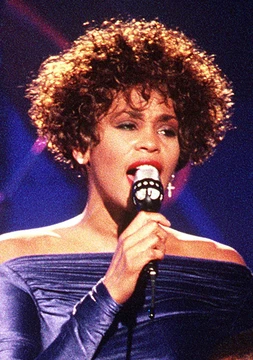
The NAACP Image Awards are an annual ceremony presented by the National Association for the Advancement of Colored People, honoring outstanding achievement in African American entertainment across music, film, television, and the broader arts. For fans of Whitney Houston, the Image Awards represent one of the most deeply personal and culturally resonant chapters of her career—a stage where her artistry was celebrated not just for commercial success but for its rootedness in Black musical tradition and community pride. Throughout the 1980s and 1990s, Whitney was a recurring and beloved presence at the ceremony, collecting multiple awards for Outstanding Female Artist and other categories. Her performances and acceptance speeches became touchstones for fans, embodying the intersection of gospel, R&B, and pop that defined her sound. In the Whitney Houston universe, the Image Awards are less a corporate gala and more a homecoming—a place where the community that shaped her music gathered to honor her in return.
- Organization
- National Association for the Advancement of Colored People (NAACP)
- Purpose
- Celebrating excellence in African American entertainment
- Frequency
- Annual ceremony
- Whitney Houston's role
- Multiple-time winner, Outstanding Female Artist and other categories
- Categories honored
- Music, Film, Television, and broader arts
- Cultural significance for fans
- A homecoming stage rooted in Black musical tradition
Lore & Background
In the Whitney Houston fan mythology, the NAACP Image Awards carry a weight that the Grammys or the Oscars simply cannot replicate. The Grammy stage is universal, corporate, polished; the Image Awards stage is communal, specific, warm. When Whitney stepped up to accept an Outstanding Female Artist trophy, the audience was not a sea of industry executives but a congregation of the very culture—gospel choirs, R&B veterans, civil-rights storytellers—that had built the foundation of her sound. Fans recall the glow in her eyes, the way she would thank her mother Cissy, her father John, the choir members of New Jersey, as though naming the roots of a tree so the world could see where the branches grew. The ceremony also served as a proving ground for Whitney's live performance. In an era when her studio recordings were already legendary, her Image Awards sets—often stripped-down, gospel-inflected renditions of her own material or tributes to legends like Aretha Franklin and Billie Holiday—reminded audiences that the pop star was, at her core, a singer who learned to breathe in a church in New Jersey. The standing ovations at these events were not polite; they were physical, full-bodied, the kind of applause that fans describe as feeling like being inside a drum. For the Whitney Houston universe, the Image Awards are the emotional anchor of her public life. They are where the fan community sees her not as a global icon but as a daughter of a specific tradition, and that duality—universal star, local daughter—is what makes her story endure.
In Their Own Story
The ballroom hums before the curtain even rises, a low thrum of two thousand voices shifting in their seats, programs rustling, the smell of lilies and warm air conditioning. Whitney stands backstage in a column of midnight-blue silk, her hair swept back, a single strand escaping near her temple. Her manager taps her shoulder. "You're up. Outstanding Female Artist." She nods, presses her lips together the way she always did before a verse, and walks into the light. The applause hits her like a wave—warm, rolling, endless. She grips the microphone, and for a moment the ballroom goes still. Then she sings, low and unhurried, a gospel line that is not on any setlist, a melody her mother used to hum over the kitchen radio in East Orange. The audience sways. Someone in the third row is crying. Whitney closes her eyes, lets the note stretch, and the whole room breathes with her.
Reader's Guide
The NAACP Image Awards function in the Whitney Houston universe as the ceremonial heart of her cultural identity. They are not a corporate award circuit stop; they are a community rite. The "faction" here is the broader ecosystem of Black entertainment—gospel musicians, R&B producers, civil-rights advocates, family members, and the devoted fan base—that gathers annually to recognize excellence rooted in a specific tradition. Whitney's relationship to this institution is that of a beloved elder sister. She does not merely attend; she belongs. Her multiple Outstanding Female Artist wins are treated by fans as the truest measure of her artistry, more meaningful than any Billboard chart position. The ceremony's goals are twofold: to celebrate individual achievement and to reinforce the collective narrative that Black artists build upon one another's shoulders. In the broader "conflict" of Whitney's public life—the pressure of global fame, the scrutiny of tabloids, the weight of expectation—the Image Awards represent a sanctuary. They are the one stage where the narrative is not about her being a product but about her being a person, a daughter, a singer who learned in a church. Fans return to these moments in her career as a kind of spiritual home, and the awards themselves become a character in her story: loyal, warm, and always, always proud of her.
Did You Know?
- Whitney Houston's acceptance speeches at the Image Awards frequently returned to thanking her parents, Cissy and John Houston, and the New Jersey church community that shaped her vocal technique.
- The Image Awards ceremony has historically featured live musical performances, and Whitney's sets at the event were often more gospel-inflected and emotionally raw than her pop concert material.
- For fans, the Image Awards are often cited as the ceremony where Whitney felt most 'at home' on stage, in contrast to the more formal atmosphere of other major award shows.
- The NAACP Image Awards honor not only music but also film, television, and other arts, making Whitney's wins part of a broader celebration of Black creative excellence.
More in Factions & Groups
Elsewhere in the Whitney Houston universe
Spotted an error? Know more?
This is a living reference — every entry is fact-audited, and reader corrections feed straight into our audit queue. Suggest an edit · See this site's audit record