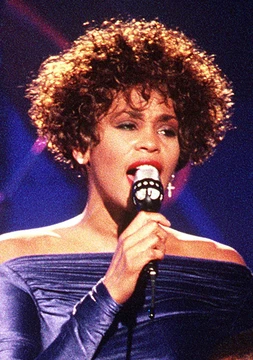
The Church of God in Christ
The sanctuary where a gospel voice first learned it was a gift, not a performance.

The Church of God in Christ (COGIC) is a historic African American Pentecostal Christian denomination that formed the spiritual bedrock of Whitney Houston's upbringing. Rooted in the traditions of the Great Awakening and the Holiness movement, COGIC emphasizes the active work of the Holy Spirit, fervent prayer, and congregational worship as central to the believer's life. For Whitney, the church was not merely a Sunday obligation but the living architecture of her childhood in New Jersey—a place where her mother Cissy Houston's voice filled the sanctuary and where the call-and-response rhythms of gospel worship first shaped the young girl's understanding of music as communion. In the broader Whitney Houston narrative, COGIC functions as the moral and emotional anchor against which the glittering pressures of the entertainment industry are measured. It is the world she returned to, the congregation that watched her rise, and the spiritual language she carried into every performance, every interview, and every private moment of doubt. Fans who follow her story recognize the church as the quiet, constant counterweight to fame—the place where she was simply a daughter, a singer, a person of faith.
- Type
- African American Pentecostal Christian denomination
- Whitney's connection
- Grew up as a member; mother Cissy Houston was a gospel singer within the tradition
- Theological emphasis
- Active Holy Spirit, congregational prayer, spiritual gifts, gospel worship
- Cultural role in Whitney's story
- Moral compass, musical origin, and recurring source of identity
- Geographic roots
- Founded in the American South; prominent across the Northeast, including New Jersey
Lore & Background
In the world of Whitney Houston's story, the Church of God in Christ is rendered less as an abstract institution and more as a living room with a pulpit. The pews are worn smooth by generations of families; the air smells of floor wax and old hymnals; the sound system hums with a warmth that no studio can replicate. Cissy Houston's presence in that space is legendary among fans—her voice described as a physical force, filling the nave and pressing against the stained glass, turning a Sunday service into a small, sacred concert that no recording could capture. Whitney's relationship with the church is layered. As a child, she was the little girl in the choir, learning to breathe with the congregation, to feel the bass in her chest before she understood the lyrics. As a teenager and young adult, the church became a point of tension: the world outside wanted her to be a pop star, a sex symbol, a commodity, while the sanctuary reminded her she was a daughter of God with a particular calling. Fans often note that in her most vulnerable interviews, her language shifts from industry jargon to the cadence of prayer, as if the church's grammar is the only one that fully fits her. The denomination's emphasis on the Holy Spirit's direct, unmediated work in a believer's life gives the Whitney Houston narrative a particular theological texture. Her singing is not merely technical excellence; in the framework of her faith, it is a form of worship, a channel. This distinction—between performance and prayer, between audience and congregation—runs through every major turning point in her story, from her first public appearances to her final years, and it is what gives the church its quiet, inexhaustible power in the fan imagination.
In Their Own Story
The sanctuary is half-full. It is a Tuesday, not Sunday, and the light through the east windows has that late-afternoon amber quality that makes everything look like a memory. Cissy sits in the third pew, not the front, and she is humming—just to herself, a melody that hasn't been written down yet, something that will become a lullaby for a child who is still in the womb. The pastor is mid-sermon, talking about the widow's mite, about small offerings that shake the house. In the back row, a seven-year-old Whitney presses her forehead against the pew in front of her, eyes closed, feeling the vibration of the congregation's 'Amen' travel up through the wood grain and into her teeth. She does not know yet that she will be asked to sing for millions. She knows only that when the room says 'Amen,' her whole body answers before her mouth does, and that this answering is the truest thing she has ever done. The pastor's voice fades. The hum in Cissy's throat does not. And somewhere in the rafters, the old wooden beams creak as if the building itself is breathing along with them.
Reader's Guide
The Church of God in Christ is the spiritual and cultural faction at the heart of Whitney Houston's world. It is not a political body or a corporate entity; its power is moral, musical, and communal. Its stated goal is the edification of the congregation through worship, prayer, and the exercise of spiritual gifts. In practice, within the Whitney narrative, it functions as the origin point for her vocal training, the ethical benchmark against which her career choices are measured, and the recurring sanctuary she returns to when the outside world becomes too loud. Key members in the story include Cissy Houston, whose gospel ministry within the tradition shaped Whitney's earliest musical education, and the broader congregation of New Jersey families who watched Whitney grow from a choir child into a global icon. The denomination's internal culture—call-and-response worship, prophetic prayer, the expectation that every member has a gift to offer—provides the rhythmic and theological vocabulary that fans recognize in Whitney's singing style. In the broader conflict of the Whitney Houston story, COGIC stands as the stable, grounding force against the destabilizing pressures of the music industry, tabloid culture, and personal struggle. It does not resolve the conflict, but it provides the language through which the conflict is understood: as a question of calling versus career, of spirit versus flesh, of what the body is for when the world demands it be a product. The church's role is not to save Whitney from her story but to give her the words to tell it.
Did You Know?
- Whitney Houston's early vocal training was deeply shaped by gospel singing within the COGIC tradition, where call-and-response and congregational participation are central to worship.
- Cissy Houston's career as a gospel and church singer within this denomination provided Whitney with her first and most formative musical education, predating any formal studio training.
- The Pentecostal emphasis on the Holy Spirit's direct work in a believer's life is a theological framework that fans often cite when interpreting Whitney's descriptions of her singing as 'prayer' rather than performance.
- COGIC's congregational culture—where every member is expected to participate vocally in worship—mirrors the communal, participatory energy that fans describe as the emotional core of Whitney's live performances.
Frequently Asked Questions
Who is The Church of God in Christ?
COGIC is a Pentecostal Christian denomination with deep roots in the African American South, tracing its spiritual lineage back to the Great Awakening and Holiness movements. It grew into one of the most prominent Black churches across the Northeast, including New Jersey.
What role did COGIC play in Whitney Houston's upbringing?
The church served as the spiritual and moral center of Whitney's childhood in New Jersey, shaping her values and daily rhythm. Her mother Cissy Houston was a gospel singer within this tradition, so the sanctuary was essentially a second home for the young Whitney.
How did COGIC shape Whitney's singing style?
The call-and-response worship patterns and congregational prayer practices gave Whitney her earliest exposure to vocal performance and emotional expression through song. Those church rhythms became the foundational grammar of her later pop and R&B delivery.
What theological emphasis does COGIC carry?
The denomination places heavy weight on the active presence of the Holy Spirit, the exercise of spiritual gifts, and fervent congregational prayer as the heartbeat of worship. Gospel music is treated not as entertainment but as a direct channel of spiritual experience.
Why do fans keep bringing up COGIC when discussing Whitney?
For many in the fan community, the church represents the moral compass and cultural identity that grounded Whitney outside of her public career. It is the thread that connects her faith, her family legacy, and the origin of her extraordinary voice.
More in Factions & Groups
Elsewhere in the Whitney Houston universe
Spotted an error? Know more?
This is a living reference — every entry is fact-audited, and reader corrections feed straight into our audit queue. Suggest an edit · See this site's audit record