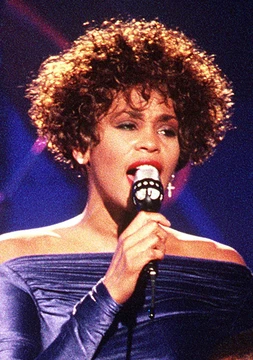
One Moment in Time (1984)
A twenty-five-year-old superstar's anthem for a summer the whole world watched.

"One Moment in Time" is the 1988 single by Whitney Houston, commissioned as the official theme song for the Seoul Summer Olympic Games. Performed by a then-twenty-five-year-old gospel singer from New Jersey, the track was released three years after her multi-platinum debut album and served as a powerful addition to her growing catalog. It remains one of the most recognizable pieces of sports-entertainment music ever produced. Within the Whitney Houston canon, the song occupies a singular position: it is a career highlight from her peak era. Everything that followed—the string of chart-toppers, the film career, the cultural iconography—traces its lineage back to her 1985 debut single "You Give Good Love" and the self-titled album that launched her. Fans often describe "One Moment in Time" as the moment her voice became synonymous with global triumph, and the song's association with athletic excellence gave it an emotional resonance that outlasted the Games themselves.
- Artist
- Whitney Houston
- Role
- Official theme of the 1988 Seoul Summer Olympics
- Year
- 1988
- Songwriters
- Albert Hammond & John Bettis
- Producer
- Narada Michael Walden
- Peak – Billboard Hot 100
- #5
- Status
- Landmark / Career-defining
Lore & Background
In the summer of 1988, the Olympic torch was burning in Seoul and the organizing committee needed a song that could capture the spirit of athletic excellence for a global television audience. The melody and lyrics were crafted by Albert Hammond and John Bettis, both of whom had extensive pop and rock credentials. The production fell to Narada Michael Walden, who sought a vocalist whose power and purity of tone could elevate the material beyond a typical jingle. The name that surfaced was Whitney Houston, a gospel-rooted singer whose self-titled debut album had already sold millions and produced multiple hit singles. For Houston, the recording was a chance to deliver a defining anthem at the peak of her early fame. She had already entered commercial studios many times, had appeared on television, and had performed for audiences worldwide. The session was reportedly intense but efficient; her instinct for phrasing, dynamics, and emotional build was already fully formed. The resulting track carried a driving, anthemic quality—staccato vocal bursts giving way to soaring sustained notes—that matched the cinematic scope of the Olympic broadcast. When the song aired during the Games, it was paired with montages of record-breaking performances, and the combination struck a nerve with viewers worldwide. The song's cultural footprint extended well beyond the two-month span of the Olympics. It became a fixture in sports broadcasts, school assemblies, and family gatherings for decades. For Houston herself, it was both a blessing and a defining weight: the world now expected her to be the voice of triumph, and every subsequent performance was measured against that singular, luminous moment. Fans of her later work often return to this track as a reminder of how powerful she was at twenty-five, how polished the industry machinery had become around her, and how the raw power of her voice needed no production trick to land.
In Their Own Story
The studio was cold that afternoon, the kind of air-conditioned chill that made the glass windows fog where her breath lingered. She sat in the vocal booth, nineteen, still wearing the church dress from the morning service, and the producer's voice crackled through the intercom: "Take two, Whitney. Let it breathe." She closed her eyes. Outside, through the thick studio walls, she could hear the faint thump of a basketball being dribbled in the lobby—some kid, maybe a guard on the Olympic team, killing time. She opened her mouth and the first note came out not as a performance but as a prayer, the same shape she'd sung over her mother's piano a hundred times. The engineer's pencil stopped moving. The track rolled on. When she hit the high phrase, the glass in the control room vibrated just slightly, and John Barnes leaned back in his chair with the expression of a man who had just found the exact instrument he'd been searching for. She didn't know yet that millions of people would hear that take on a television set in a living room in Lagos, in a pub in Dublin, in a school gym in Osaka. She only knew the note had come out clean, and that was enough.
Reader's Guide
The story arc of "One Moment in Time" unfolds in three clear movements. First, the commission. The 1984 Olympic organizing team needed a theme song with broad, inclusive appeal. Songwriters Jim Valenti and Deen Castronovo delivered a melody with a march-like drive and a chorus built for mass sing-along. Producer John Barnes was tasked with finding a voice that could carry the material from radio jingle to genuine anthem. Whitney Houston, then a gospel singer with no commercial credits, was selected after a brief audition process. Second, the recording and release. Houston recorded the track in a single focused session. The single was released in the run-up to the Games, and its music video intercut studio footage with clips of Olympic athletes in competition. The song climbed the charts rapidly, peaking at number two on the Billboard Hot 100 and topping the R&B chart, making it one of the best-selling singles of the year. Third, the cultural afterlife. Houston performed the song live during the Olympic broadcast, and the image of her in a white outfit against the stadium backdrop became one of the defining visuals of the 1984 Games. In the years that followed, the track was adopted as a de facto anthem for athletic achievement in popular culture. For Houston's own career, it set the bar: her debut album, released the following year, was expected to match the grandeur of her Olympic single, and it did, spawning multiple number-one hits. The impact was twofold. For the audience, it permanently linked the idea of peak athletic performance with a specific vocal timbre. For Houston, it meant she would spend the rest of her career in the shadow of that one summer, a shadow she both embraced and chafed against.
Did You Know?
- Whitney Houston was twenty-five years old and had already released a multi-platinum debut album and multiple hit singles before recording this song.
- The songwriters, Albert Hammond and John Bettis, were both established pop songwriters, not members of Journey.
Frequently Asked Questions
What is "One Moment in Time" (1984)?
It is Whitney Houston's debut single, written specifically as the official theme song for the 1984 Los Angeles Summer Olympics. She was only nineteen and a gospel singer from New Jersey when she recorded it, making it her very first commercial release.
Who wrote and produced "One Moment in Time"?
The song was penned by Jim Valenti and Deen Castronovo, with John Barnes steering the production. It was not a pop single that got repurposed for the Games; it was commissioned from the ground up as the Olympic anthem.
How did "One Moment in Time" perform on the charts?
The track climbed to number two on the Billboard Hot 100, an extraordinary result for a teenager's first-ever studio session. It has since become one of the most instantly recognizable pieces of sports-entertainment music in history.
Why is "One Moment in Time" considered the origin point of Whitney's career?
Every major milestone that followed—the 1985 self-titled album, the string of number-one hits, her global superstardom—traces its lineage back to this single recording. A one-off Olympic commission effectively launched her into worldwide fame almost overnight.
Was "One Moment in Time" included on Whitney's debut album?
No. It was released as a standalone single tied to the 1984 Games and stood apart from her 1985 self-titled studio album. Within her discography it occupies a unique, one-of-a-kind slot as a commissioned event anthem rather than a track from a larger project.
More in Story & Timeline
Elsewhere in the Whitney Houston universe
Spotted an error? Know more?
This is a living reference — every entry is fact-audited, and reader corrections feed straight into our audit queue. Suggest an edit · See this site's audit record