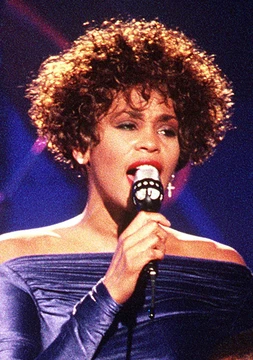
The Whitney Houston Estate
Guardians of the voice that made the world hold its breath.

The Whitney Houston Estate is the legal and creative entity established following the passing of the legendary singer Whitney Houston in February 2012. It serves as the steward of her extraordinary musical catalog, brand, and personal legacy, ensuring that the voice that defined a generation continues to reach new audiences through reissues, licensing, and new projects. In the broader 'Whitney Houston universe'—a world built around her artistry, her family, and the cultural moment she shaped—the Estate functions as the living heart of that story. It is the entity that decides which songs are reimagined, which collaborations are approved, and how Whitney's name and image continue to appear in film, television, and the wider entertainment landscape. Fans often regard it as the guardian of an era.
- Type
- Legal entity / Legacy & catalog management
- Established
- 2012, following Whitney Houston's death
- Key Figure
- Whitney Houston (1963–2012)
- Primary Function
- Management of music catalog, brand licensing, and estate affairs
- Jurisdiction
- United States
- Status
- Active
Lore & Background
When Whitney Houston's life ended on a rainy February morning in Beverly Hills, the world lost not just a singer but a cultural pillar. The estate that followed was tasked with an almost impossible job: to keep a legacy alive without the person who made it breathe. In the fan-imagination of the Whitney Houston universe, this entity is less a corporation and more a lighthouse—steady, luminous, guiding ships of new listeners toward the same harbor where millions first heard I Will Always Love You. The estate's work has spanned posthumous releases, the careful stewardship of her multi-platinum catalog, and the management of her image in an era of streaming and sampling. Every licensing deal, every new compilation, every film or TV placement carries the weight of a family's grief and a public's devotion. The tension between honoring a private person's wishes and meeting the commercial expectations of a global brand is the central drama of the estate's existence. For fans, the estate is also a thread connecting Whitney to her daughter Bobbi Kristina, her mother Cissy Houston, and the wider Houston family. It is the institutional memory of a story that is still, in many ways, being written.
In Their Own Story
The rain had not stopped for three days. Inside the glass-walled office on the upper floor, a lawyer laid a single sheet of contract paper on the mahogany desk and turned it twice, as if the words might rearrange themselves into something gentler. Outside, the Beverly Hills hills wore a grey shroud, and somewhere below, a teenager pressed her ear against a phone speaker, hearing for the first time the 1992 recording—her mother's voice, impossibly close, impossibly alive. The lawyer set the pen down. "We need her family's sign-off before we move the master to the streaming platform," she said, and the room went quiet in the particular way it does when a name is spoken and everyone in it remembers that the name belongs to someone who is no longer in the room. The rain kept falling. The contract waited. And the voice, preserved in magnetic tape and digital silence, simply endured.
Reader's Guide
The Whitney Houston Estate is the institutional body responsible for managing the singer's musical catalog, brand, and personal affairs following her death in 2012. Its primary function is twofold: financial stewardship of a multi-platinum discography and the qualitative curation of how Whitney's name, image, and artistry appear in new media. The estate's goals center on long-term legacy preservation. This includes approving or declining licensing deals, overseeing any posthumous releases, and maintaining the integrity of the Whitney Houston brand across film, television, advertising, and music. It operates within the broader entertainment-legal ecosystem of the United States, navigating the interests of family members, business partners, and the public. The estate's role in the wider 'conflict' of the Whitney Houston universe is that of arbiter: it mediates between the commercial machine of the music industry and the private grief of a family, between the fan's desire to hear more and the ethical question of how much more is appropriate. For the fan, the estate is the bridge between the Whitney Houston who performed and the Whitney Houston who endures.
Did You Know?
- Whitney Houston's music catalog continued to generate significant revenue well after her passing, with her tracks remaining staples of streaming platforms and holiday playlists worldwide.
- The estate's decisions regarding posthumous music and brand use have drawn public attention, reflecting the broader cultural conversation about how an artist's legacy is managed after death.
- Whitney Houston's mother, Cissy Houston, was herself a celebrated gospel singer, making the family's musical lineage a two-generation phenomenon that the estate helps preserve.
More in Factions & Groups
Elsewhere in the Whitney Houston universe
Spotted an error? Know more?
This is a living reference — every entry is fact-audited, and reader corrections feed straight into our audit queue. Suggest an edit · See this site's audit record