George Duke
The keyboard architect who wove jazz harmony into the fabric of American pop.

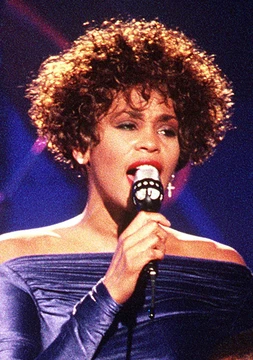
via Wikipedia: Cultural impact of Whitney Houston · see source
George Duke was a jazz-fusion pianist, composer, arranger, and producer whose virtuosic keyboard work helped shape the sound of 1970s and 1980s American popular music. A figure of the Los Angeles session scene, he moved fluidly between avant-garde jazz, R&B, and soul, lending his distinctive harmonic vocabulary to a wide circle of collaborators. In the broader musical landscape that would later give rise to the vocal giants of the 1980s and 1990s, Duke represented the fusion bridge—proof that the boundaries between jazz improvisation and pop production were already dissolving long before Whitney Houston's era made that crossover a global phenomenon.
- Role
- Pianist, composer, arranger, producer
- Genre
- Jazz fusion, R&B, soul
- Instruments
- Piano, synthesizers, keyboards
- Notable association
- Miles Davis ensemble (early 1970s)
Lore & Background
George Duke emerged from the Los Angeles music scene in the early 1970s as a pianist of extraordinary range. His playing carried the angular, modal vocabulary of post-bop jazz while simultaneously embracing the rhythmic drive and textural richness that fusion was just beginning to demand. His stint with Miles Davis's band placed him at the epicenter of that transition, where acoustic tradition met electronic experimentation and the studio became as much an instrument as any single player. Beyond that high-profile association, Duke built a prolific solo and session career. He composed and arranged with a harmonic sophistication that set his work apart from his peers—chord progressions that shifted unexpectedly, voicings that layered dissonance over groove, and a compositional instinct that treated the twelve-bar form as a starting point rather than a cage. Producers and bandleaders sought him out because his parts never merely supported a track; they redefined its emotional architecture. By the time the 1980s and 1990s produced a generation of vocalists who demanded lush, cinematic production, the groundwork Duke and his contemporaries had laid—blurring the line between a jazz combo and a pop record—was already baked into the industry's DNA. His legacy lives in the harmonic language of an entire generation of songwriters who never needed to cite his name to use his ideas.
In Their Own Story
The studio was dark except for the amber glow of the console and the blue wash of a single practical light over the Rhodes. George sat at the keys, eyes half-closed, fingers tracing a progression that had no business resolving the way it did. The engineer called out a count. George didn't open his eyes. He played the phrase three times, each iteration a little more angular, a little more aching, until the third pass landed in a voicing that made the engineer set down his coffee and just listen. The tape rolled. No one spoke. The room smelled of cold coffee and warm tube amps. Somewhere in that single take, a chord change lived that the rest of the track would orbit around for the next forty years.
Reader's Guide
George Duke was, above all, a harmonic architect. His role in any ensemble—whether a jazz combo, a studio session, or a solo record—was to supply the chordal and melodic framework that gave a performance its emotional gravity. He was not a frontman in the pop sense; his authority came from the quality and originality of his voicings, his rhythmic placement, and his willingness to let a progression breathe in unexpected directions. His primary skill set was keyboard: acoustic piano, Rhodes, synthesizers, and whatever electronic texture the session demanded. Composition and arrangement were equally central. He could take a simple four-chord pop skeleton and re-voice it so that it felt simultaneously familiar and strange. His defining moments cluster in the early-to-mid 1970s, when his work with Miles Davis placed him at the crossroads of acoustic jazz and electronic fusion. After that, his solo records and session work spread his influence across R&B, soul, and jazz for decades. There is no single "arc" in the narrative sense. Instead, think of him as a constant: a reliable, brilliant harmonic voice in a rapidly changing industry, whose fingerprints are on recordings that span genres and eras.
Did You Know?
- George Duke's stint with Miles Davis's band placed him at the epicenter of the transition from acoustic jazz to electronic fusion.
- Duke's chord progressions often shifted unexpectedly, layering dissonance over groove to redefine a track's emotional architecture.
- Producers and bandleaders sought Duke out because his keyboard parts never merely supported a track—they redefined its emotional architecture.
- Duke's harmonic language influenced an entire generation of songwriters who never needed to cite his name to use his ideas.
More in Characters
Related in Whitney Houston
Links follow this subject's own source article.
Elsewhere in the Whitney Houston universe
Spotted an error? Know more?
This is a living reference — every entry is fact-audited, and reader corrections feed straight into our audit queue. Suggest an edit · See this site's audit record