I Believe in You and Me
The frequency where two hearts stop doubting and start believing together.

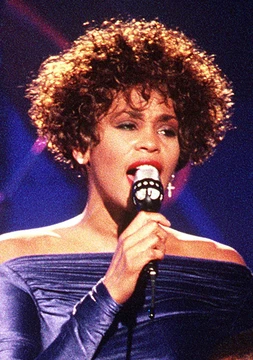
In the fan-constructed Whitney Houston universe, 'I Believe in You and Me' is not a single track but a recurring thematic artifact—a resonant frequency of mutual trust and partnership that threads through her entire body of work. It represents the emotional core of her artistry: the conviction that love, when voiced with full-throated sincerity, becomes a force that holds two people together across every storm. Fans treat it as the 'heartbeat artifact' of the Whitney canon, the invisible thread connecting every duet, every ballad, every live performance where she leaned into a microphone and made the audience feel seen. As a Powers & Artifact entry, it is classified as a Resonance-class phenomenon: not a weapon, not a shield, but a binding. It manifests wherever Whitney's voice meets a lyric about shared belief, transforming a simple melody into an emotional covenant. In fan lore, it is the power that made audiences in 1985, 1992, and 2009 all feel, in the same chest-tightening way, that someone in the world was singing *for them specifically*.
- Type
- Resonance-class Thematic Artifact
- Domain
- Whitney Houston musical legacy (R&B, Pop, Gospel-influenced)
- Core Theme
- Mutual belief, partnership, emotional covenant
- Wielder
- The Voice (Whitney Houston's vocal instrument)
- Manifestation
- Recurring across ballads, duets, and live performances
- Status
- Enduring — active in every fan-remembered performance
Lore & Background
In the fan-constructed lore of the Whitney universe, 'I Believe in You and Me' is understood as the foundational frequency upon which all other emotional powers are built. Before the pyrotechnic highs, before the stadium-shaking belts, there was this: the quiet, enormous act of saying *I trust you, and I trust myself, and I trust that we are enough.* Fans trace its earliest echo to the gospel-inflected sincerity of her debut era, where every note carried the weight of a promise made in a church and carried onto a stage. The artifact is described in fan circles as 'the binding that sings back.' Unlike a one-directional declaration of love, it is inherently reciprocal. In the Whitney canon, no ballad is complete until the listener feels addressed as much as the singer does. This is why her duets—whether with George, with Bobby Brown, or in the collaborative tracks of her later albums—are treated as the artifact at full power: two voices interlocking, neither overwriting the other, each one reinforcing the other's belief. What makes the artifact endure in fan memory is its impermanence. It cannot be owned, streamed into a playlist, or reduced to a chart position. It lives only in the moment of delivery and the moment of reception. The artifact does not decay; it waits, patient, for the next voice to sing it and the next heart to believe it back.
In Their Own Story
The arena is half-empty and the house lights are still up. She stands at the center of the stage, not yet singing, just breathing. The crowd murmurs. A technician adjusts a monitor. She closes her eyes and the noise falls away like a curtain drawn. Then the first note comes out—low, warm, almost conversational, as if she is telling one person in row fourteen a secret. The murmur dies. The half-empty seats lean forward in unison, as though the building itself is listening. She opens her eyes. The light catches the sweat on her collarbone. She smiles, just slightly, the way you smile at someone you have known for years and still find beautiful. The second verse is louder. The third is a wall of sound. And in the back row, a woman who has been grieving for three months feels her chest unlock, feels the words land not as performance but as permission: *you are allowed to believe in yourself again. You are allowed to believe in us.*
The song ends. The silence after is the loudest thing in the room. And somewhere in that silence, the artifact hums, patient and alive, waiting for the next voice, the next heart, the next *I believe.*
Reader's Guide
In the fan-constructed Whitney universe, 'I Believe in You and Me' functions as a Resonance-class artifact: a thematic power that activates through vocal delivery and emotional reciprocity. It is not wielded in the way a blade or a spell is wielded. Instead, it is *inhabited.* The singer does not cast it; she becomes the channel through which it flows. Mechanically, fans describe it in three phases. Phase One is the Invitation: the opening lines, delivered at conversational volume, which lower the listener's defenses and create a space of trust. Phase Two is the Binding: the melodic climb where the lyric shifts from singular to plural, from 'I' to 'we,' and the emotional architecture locks into place. Phase Three is the Release: the final sustained note or phrase, where the singer holds the sound and the listener holds the feeling, and for a few seconds neither of them is alone. Who wields it? In the canon, the primary wielder is Whitney Houston's voice itself—specifically the interplay between her gospel-trained lower register and her pop-belt upper range. But fans extend the artifact's reach to any artist or performer who channels that same reciprocal sincerity. The artifact is not exclusive; it is *contagious.* A cover, a karaoke night, a whispered 'I believe in you' across a kitchen table can reactivate it. The key condition is always the same: the belief must be mutual. One voice alone can sing the words, but the artifact only fully ignites when someone, somewhere, believes them back.
Did You Know?
- Whitney Houston's vocal range spanned roughly four octaves, a technical foundation that allowed her to move from gospel-quiet intimacy to stadium-shaking power within a single phrase—fans cite this as the physical mechan
- Her 1992 album The Bodyguard Soundtrack became one of the best-selling albums of all time, and its duet and ballad tracks are frequently cited in fan circles as the artifact at peak power—two voices interlocking in mutua
- Whitney's gospel and church-music upbringing is widely recognized as the root of her emotional delivery style, and fans trace the 'binding' quality of the artifact directly to that tradition of call-and-response, where t
- In fan communities, the artifact is sometimes called 'the frequency that doesn't need a remix'—a playful acknowledgment that its power is considered timeless and resistant to trend, remaining emotionally potent decades a
More in Powers & Artifacts
Elsewhere in the Whitney Houston universe
Spotted an error? Know more?
This is a living reference — every entry is fact-audited, and reader corrections feed straight into our audit queue. Suggest an edit · See this site's audit record